
Villain Meaning in Simple Terms
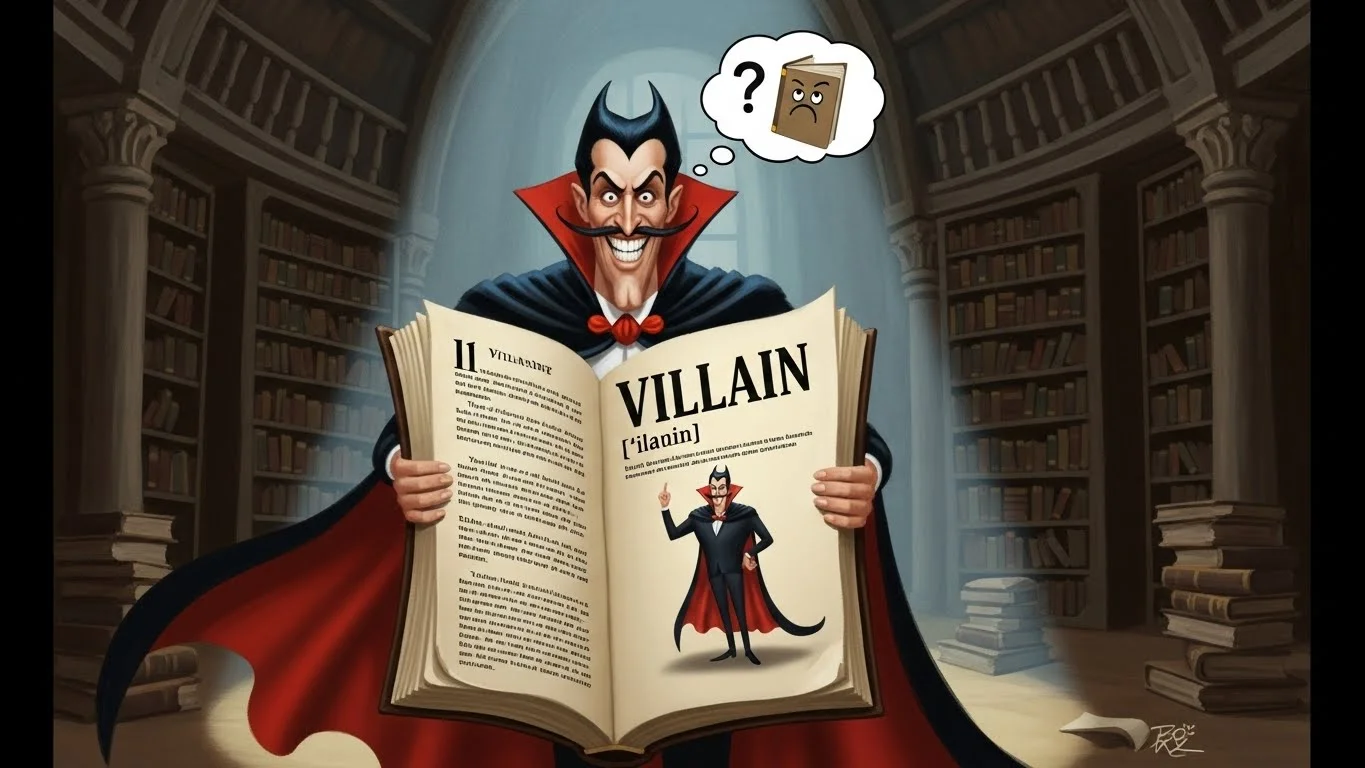
A villain is a person or character who causes harm, conflict, or trouble, especially by opposing a hero or main character.
In simple words, a villain is someone who does wrong or creates problems.
Villain Meaning in Stories
In storytelling, a villain is the main source of conflict. They challenge the hero and drive the plot forward.
Villains often:
Create obstacles
Threaten others
Represent danger or injustice
Without villains, many stories would lack tension or excitement.
Villain Meaning in Movies and TV Shows
In movies and TV series, villains are often:
Criminals
Tyrants
Masterminds
Corrupt leaders
They may use force, manipulation, or fear to achieve their goals.
Villain Meaning in Literature
In books, villains can be:
Clearly evil characters
Morally complex individuals
Ordinary people making harmful choices
Classic literature often uses villains to explore themes like power, greed, and morality.
Villain vs Hero
Hero: Protects, helps, or saves others
Villain: Opposes the hero and causes harm
The relationship between hero and villain creates the central conflict of many stories.
Types of Villains
Villains come in many forms, including:
Pure villains: Clearly evil with no remorse
Tragic villains: Motivated by pain or loss
Anti-villains: Have good intentions but harmful methods
Each type adds depth to storytelling.
Villain Meaning in Daily Language
In everyday speech, villain can describe someone who behaves badly.
Example:
“He’s the villain of the story” (blamed for causing trouble)
It’s often used figuratively, not literally.
Villain Meaning in Modern Usage
Modern storytelling often portrays villains as:
Complex and emotional
Influenced by past experiences
Sometimes sympathetic
This approach makes characters feel more realistic.
Villain Meaning in Psychology
Psychologically, villains may represent:
Fear
Moral failure
Abuse of power
They often reflect real-world problems in symbolic form.
Villain Meaning in Comics and Superhero Stories
In comics, villains are usually:
Larger than life
Visually distinctive
Opponents of superheroes
They often have clear goals and dramatic personalities.
Villain Meaning in Myths and Folklore
In myths, villains include:
Monsters
Demons
Tricksters
They test heroes and teach moral lessons.
Villain Meaning in Games
In video games, villains act as:
Final bosses
Main antagonists
Forces that players must defeat
They give players motivation and challenge.
Villain Meaning in Pop Culture
Villains often become as famous as heroes. Many are remembered for:
Memorable lines
Unique appearances
Strong personalities
Some even gain fan followings.
Common Misunderstandings About Villain Meaning
A villain is not always evil by nature
Villains are not always one-dimensional
A villain can believe they are doing the right thing
Context matters when defining a villain.
How to Identify a Villain
A character is usually a villain if they:
Intentionally harm others
Oppose the main character
Create fear or conflict
Their actions define them more than their appearance.
Villain Meaning Across Cultures
Every culture has villains, though their traits differ. Some focus on:
Greed
Betrayal
Abuse of authority
The role exists in all storytelling traditions.
Why Villains Are Important
Villains are important because they:
Create tension
Test the hero
Drive the story forward
They make stories meaningful and engaging.
Villain Meaning in Moral Lessons
Villains often teach lessons by showing:
Consequences of bad choices
The impact of selfishness
The value of justice and courage
Summary of Villain Meaning
A villain is:
A person or character who causes harm
An opponent to the hero
A key source of conflict in stories and life comparisons