


Upselling Meaning in Simple Terms
In simple terms, upselling meaning encouraging a customer to buy a more expensive product, upgrade, or additional feature than they initially intended.
Example:
“The waiter successfully used upselling by suggesting a premium wine instead of the standard option.”
Upselling vs Cross-Selling
Upselling: Promotes a higher-value version of the same product
Cross-selling: Suggests related or complementary products
Understanding the difference helps improve sales strategies.
Example:
“Upselling offered a deluxe meal, while cross-selling added a dessert to the order.”
Importance of Upselling in Business
Upselling is important because it:
Increases revenue without acquiring new customers
Enhances customer satisfaction when offering valuable upgrades
Builds long-term customer relationships through tailored recommendations
Common Upselling Techniques
Suggesting a higher-quality or premium version
Offering bundled deals or packages
Highlighting additional features or benefits
Creating urgency with limited-time offers
Example:
“Sales reps used upselling by explaining the benefits of the advanced subscription plan.”

Upselling in Retail
In retail, upselling appears as:
Product upgrades at checkout
Sales staff recommending premium options
Online stores suggesting enhanced versions of a product
Example:
“The online store used upselling by recommending the larger storage version of the phone.”
Upselling in Services
For services, upselling includes:
Premium membership plans
Extended warranties or service packages
Additional features or add-ons
Example:
“The software company practiced upselling by offering a professional package with extra features.”
Benefits of Upselling for Customers
When done ethically, upselling benefits customers by:
Providing better value or enhanced features
Offering products suited to their needs
Saving time by bundling complementary items
Examples of Upselling in Sentences
“The hotel clerk used upselling to offer a suite instead of a standard room.”
“Upselling helped the customer get a higher-quality laptop that met all their needs.”
“Restaurants often use upselling by suggesting appetizers or drinks.”
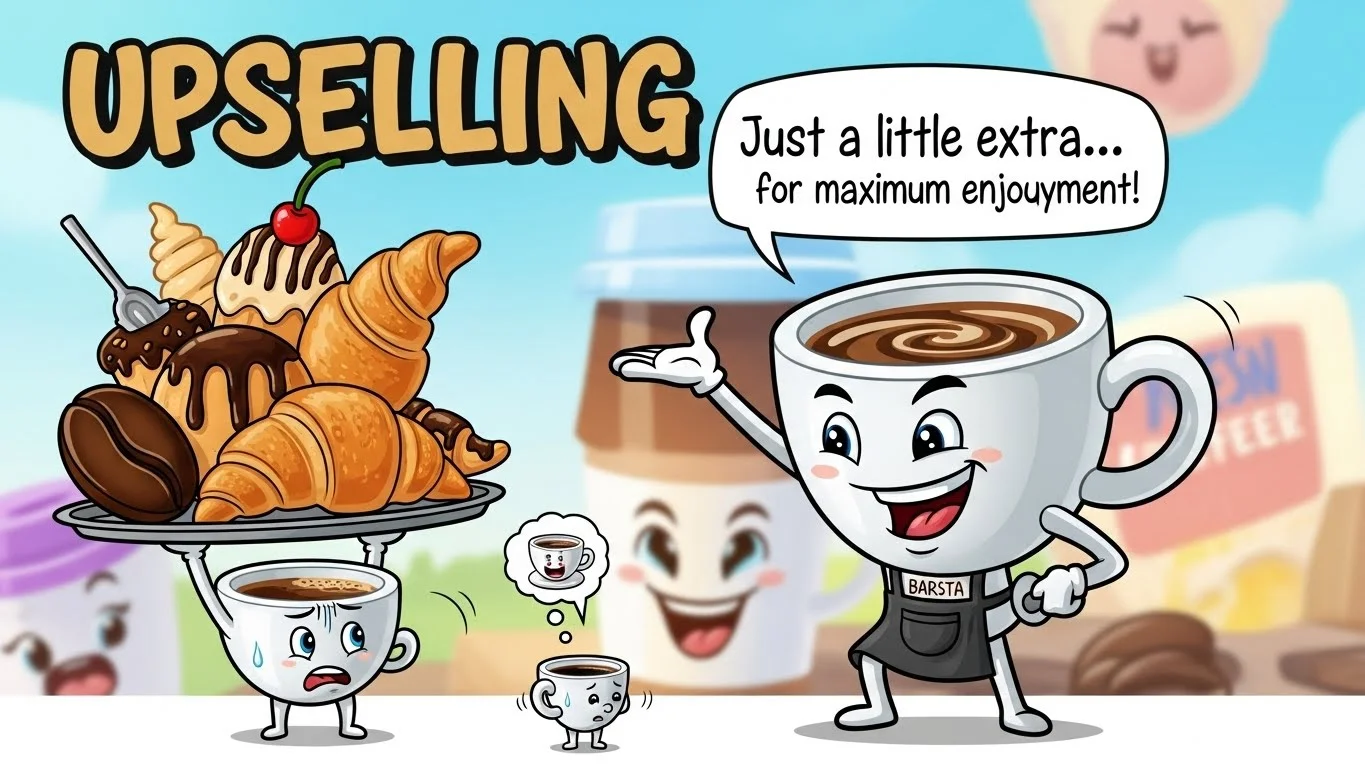
Summary of Upselling Meaning
Upselling means:
Encouraging customers to purchase higher-value products or upgrades
Different from cross-selling, which suggests complementary items
Used in retail, services, and online businesses
Benefits both businesses and customers when applied ethically