


What Does Tactile Mean in Simple Terms
In simple terms, “tactile” means related to the sense of touch. Anything you can feel physically with your hands or skin can be described as tactile.
Tactile Meaning in Daily Life
In everyday life, tactile experiences include feeling the softness of fabric, the roughness of wood, or the warmth of sunlight on your skin.
Tactile Meaning in Education
In education, tactile learning involves hands-on activities. Students learn by touching, building, or physically interacting with materials instead of only reading or listening.
Tactile Meaning in Sensory Experience
Tactile sensations are one of the five main senses. They include pressure, texture, temperature, and vibration felt through the skin.
Tactile Meaning in Design
Designers use tactile elements such as texture, materials, and finishes to enhance user experience and make products more engaging.
Tactile Meaning in Art
In art, tactile qualities refer to textures that invite touch or create a sense of physical depth, even when viewed visually.
Tactile Meaning in Technology
In technology, tactile feedback includes vibrations or physical responses, such as a phone vibrating when touched or a keyboard providing resistance.
Modern Usage of Tactile
Today, “tactile” is commonly used to describe interactive, hands-on, or physically engaging experiences in learning, design, and digital products.
Common Misunderstandings About Tactile
Some people think tactile only applies to hands. In reality, tactile sensations can be felt anywhere on the skin.
Differences Between Tactile and Visual
“Tactile” relates to touch, while “visual” relates to sight. Both senses often work together but describe different experiences.
Differences Between Tactile and Sensory
Tactile is one type of sensory experience. Sensory includes touch, sight, sound, taste, and smell.
Tactile Meaning in Psychology
In psychology, tactile stimulation plays a key role in emotional comfort, bonding, and stress reduction.
Tactile Meaning in Child Development
Children develop important skills through tactile play, such as touching textures, stacking blocks, or molding clay.
Tactile Meaning in Marketing
Marketers use tactile elements like packaging texture to influence customer perception and product appeal.
Figurative Meaning of Tactile
Figuratively, tactile can describe experiences that feel vivid, real, or physically engaging, even beyond actual touch.
Tactile Meaning in Fashion
In fashion, tactile qualities refer to how clothing feels on the skin, such as softness, stiffness, or breathability.
Emotional Impact of Tactile Experiences
Tactile experiences can create comfort, connection, or relaxation, making them emotionally powerful.
How to Use Tactile Correctly in a Sentence
Example: “The tactile surface of the fabric made the jacket feel warm and comfortable.”
When Tactile Is Used Formally
The word tactile is commonly used in academic, medical, and design-related writing to describe touch-based interaction.
Why Understanding Tactile Matters
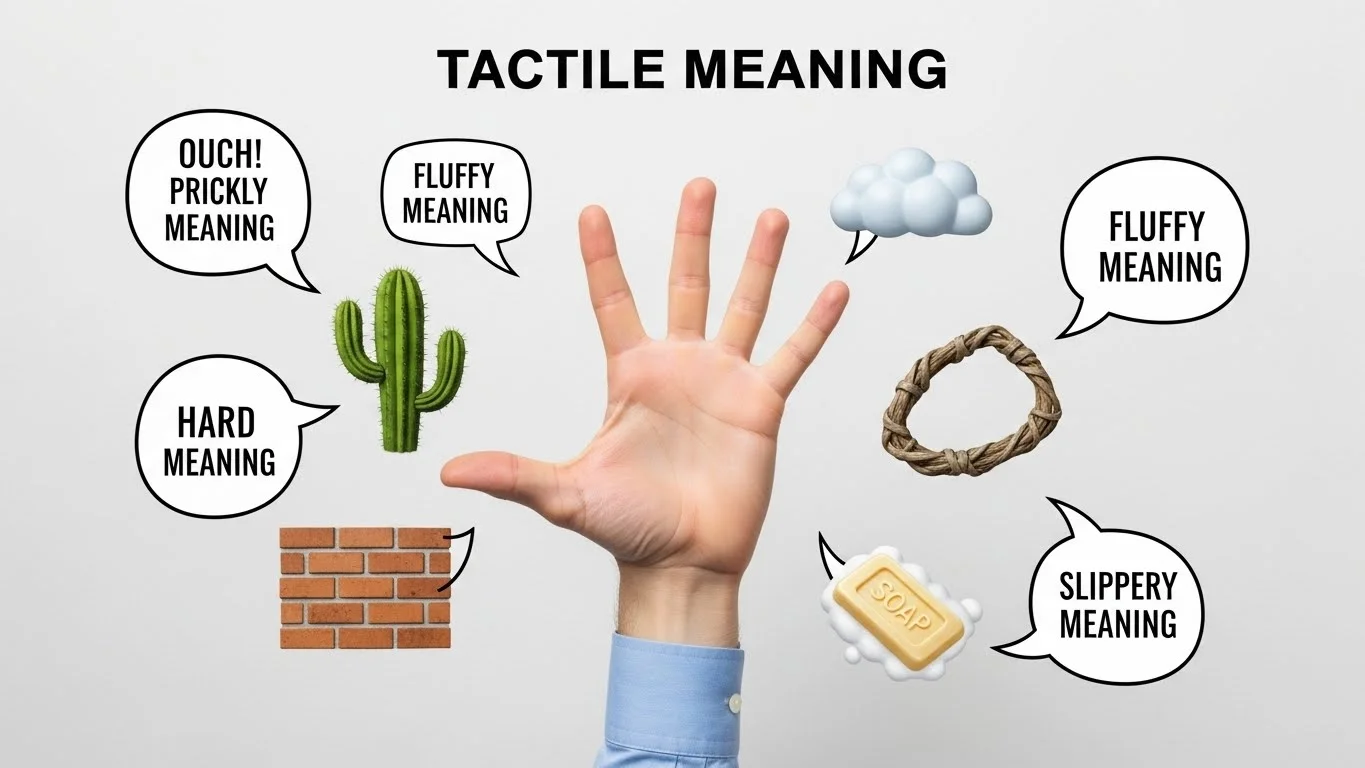
Understanding the tactile meaning helps you describe physical experiences clearly and appreciate how touch influences learning, design, and emotional well-being.