
Synesthesia Meaning in Simple Terms
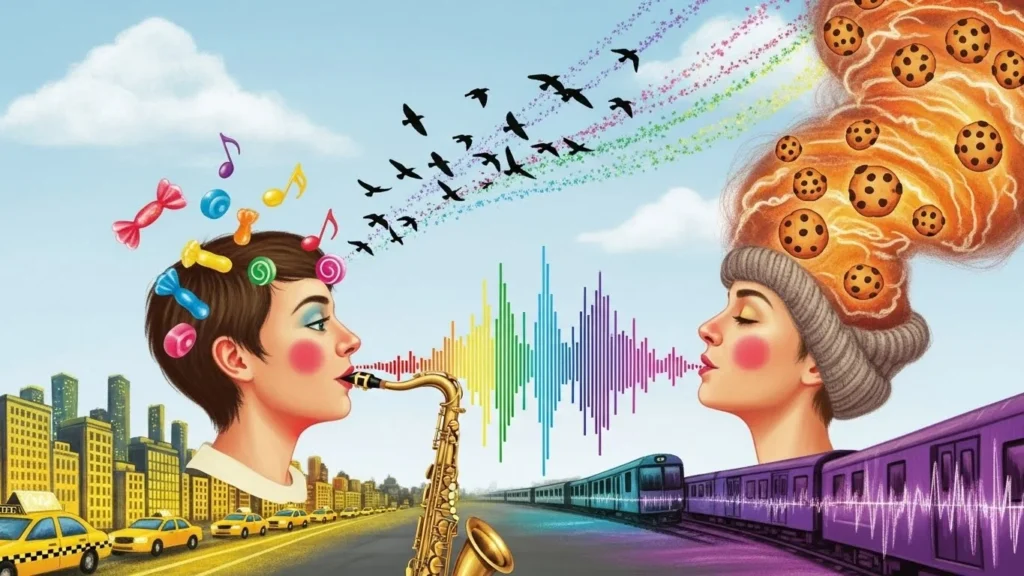
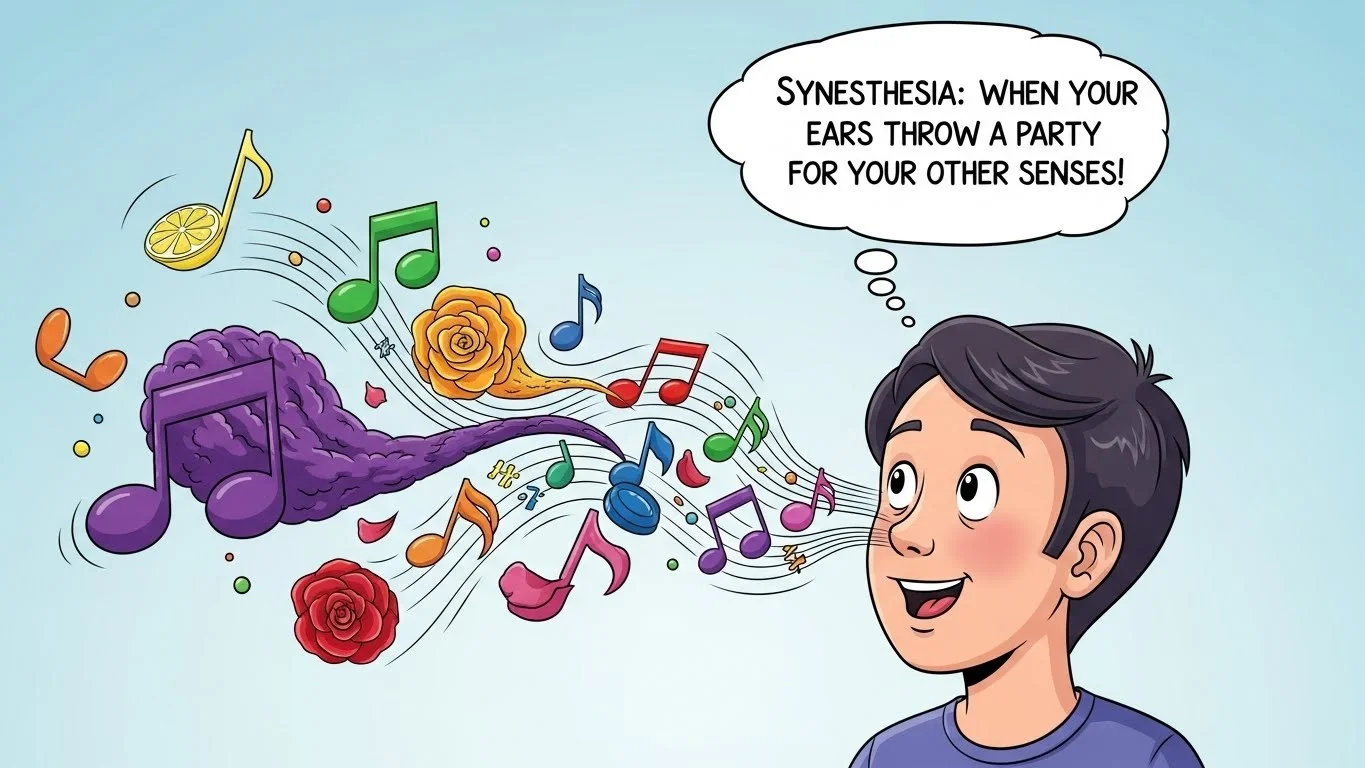
In simple terms, synesthesia is a condition where one sense automatically triggers another sense. This means a person might see colors when they hear music or taste flavors when they read words.
Example:
“She experiences synesthesia and sees colors when listening to music.”
How Synesthesia Works
Synesthesia happens when:
Different sensory areas of the brain are unusually connected
One stimulus activates multiple senses at the same time
The experience is automatic and consistent
People with synesthesia do not imagine these sensations; they genuinely experience them.
Common Types of Synesthesia
Some common types include:
Grapheme-color synesthesia: Letters or numbers appear in specific colors
Sound-color synesthesia: Sounds trigger visual colors
Lexical-gustatory synesthesia: Words produce taste sensations
Spatial-sequence synesthesia: Numbers or dates appear in specific spatial layouts
Synesthesia in Daily Life
In everyday life, synesthesia may affect:
Reading and writing
Music listening
Memory and learning
Creative expression
Example:
“A person with synesthesia may remember names better because each name has a color.”

Synesthesia and Creativity
Synesthesia is often linked to creativity because:
It enhances sensory perception
It supports artistic thinking
Many artists, musicians, and writers report synesthetic experiences
This does not mean all creative people have synesthesia, but the connection is common.
Is Synesthesia a Disorder?
Synesthesia is not considered a disorder.
It does not harm mental health
Most people with synesthesia enjoy the experience
It usually appears in childhood and lasts for life
Doctors view it as a neurological variation, not a disease.
Common Misunderstandings About Synesthesia
Thinking synesthesia is imagined (it is a real neurological experience)
Believing everyone experiences it the same way
Assuming it needs treatment (it usually does not)
Examples of Synesthesia in Sentences
“His synesthesia causes him to see numbers as shapes.”
“Music triggers colorful patterns due to her synesthesia.”
“Synesthesia can make learning more vivid and memorable.”

Summary of Synesthesia Meaning
Synesthesia means:
Blending of senses in perception
One sensory input triggers another automatically
A lifelong and consistent experience
A neurological variation, not an illness