

Strike Meaning in Simple Terms
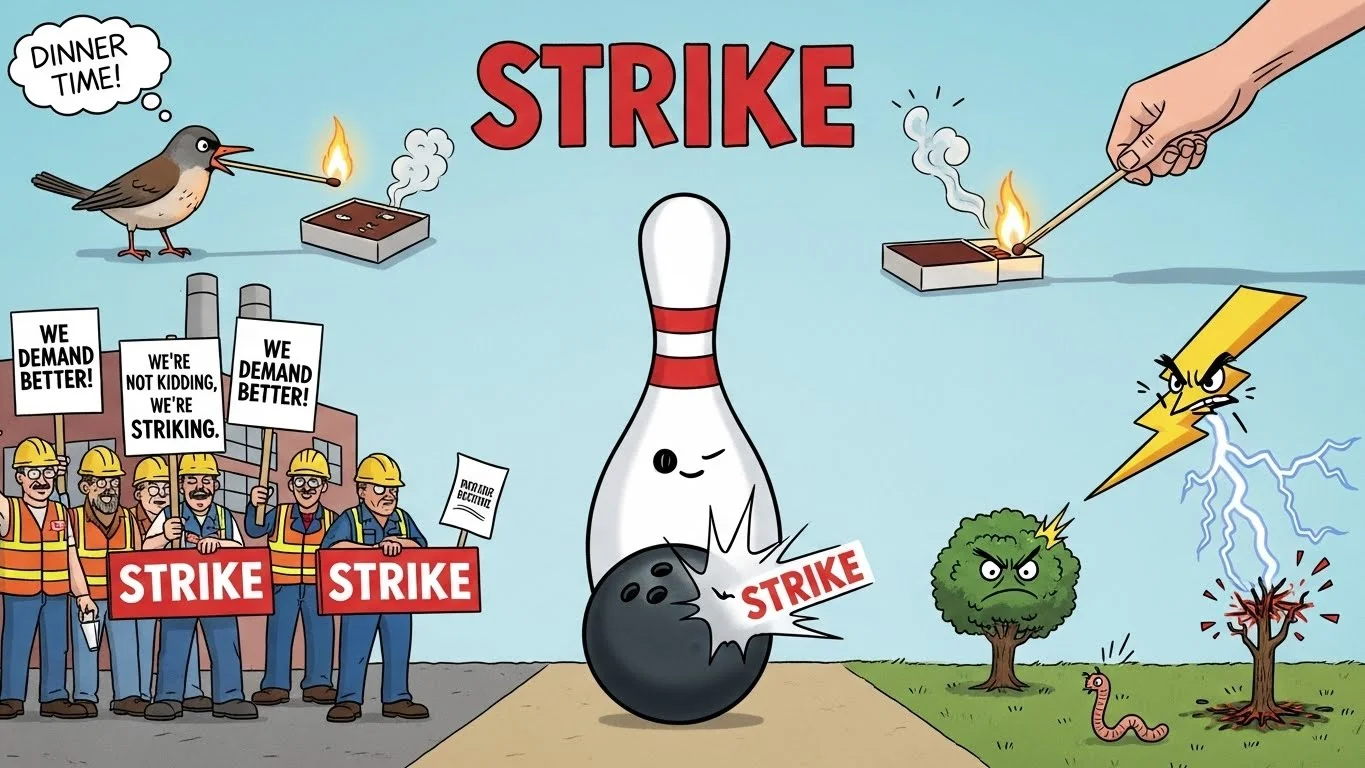
In simple terms, strike means to hit something, to stop working as a protest, or to take sudden action. The exact meaning depends on how and where the word is used.
Strike Meaning as a Verb
As a verb, strike can mean:
To hit or attack
To affect suddenly
To stop work as a protest
To remove or cross out
Example: “He struck the ball with force.”
Strike Meaning as a Noun
As a noun, strike refers to:
An organized work stoppage
A successful hit in sports
A sudden event or action
Example: “The workers went on strike.”
Strike Meaning in Work and Protests
In labor and employment contexts, a strike means:
Workers refusing to work
A demand for better wages or conditions
A form of collective protest
Strikes are common in unions and organized labor movements.
Strike Meaning in Sports
In sports, strike can mean:
A hit in baseball
A powerful action in boxing or martial arts
A scoring attempt
Example: “That was a perfect strike.”

Strike Meaning in Daily Conversation
In everyday language, strike is used to describe:
Sudden ideas (“It struck me”)
Natural events (“Lightning struck”)
Emotional reactions
It often suggests something happening quickly.
Strike Meaning in Law and Writing
In legal or written contexts, strike means:
To remove text
To cancel or reject something
Example: “The judge struck the statement from the record.”
Common Misunderstandings About Strike
Some people think strike only means:
Hitting something
Work protests
In reality, it has many meanings based on context.
Examples of Strike in Sentences
“Lightning struck the tree.”
“Employees announced a strike.”
“The batter missed the strike.”
These examples show how meaning changes by usage.

Why Understanding Strike Meaning Matters
Understanding the strike meaning helps:
Interpret news correctly
Follow sports discussions
Understand workplace issues
Communicate more clearly
Context is always the key.