
What Does Snout Mean in Simple Terms
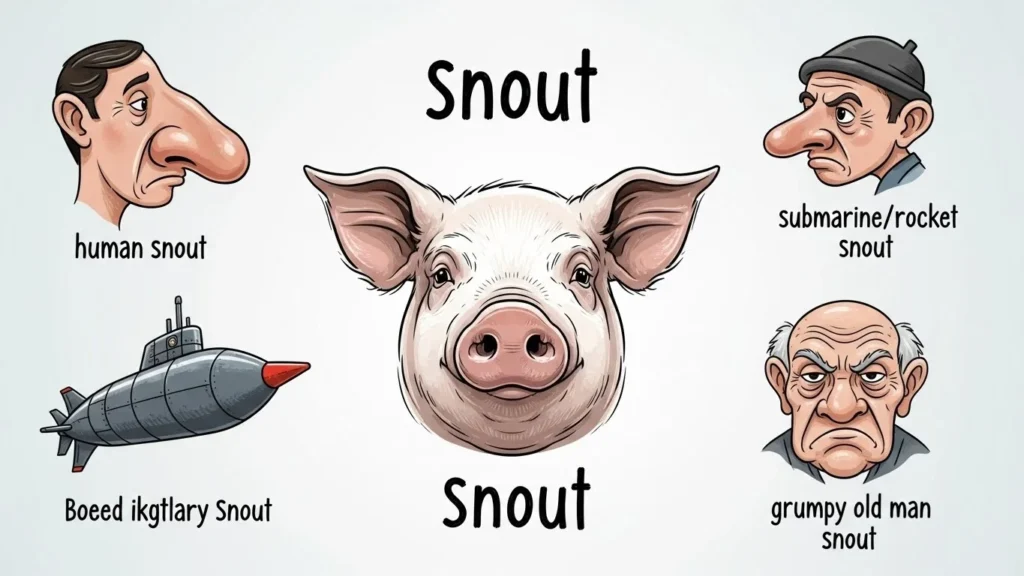
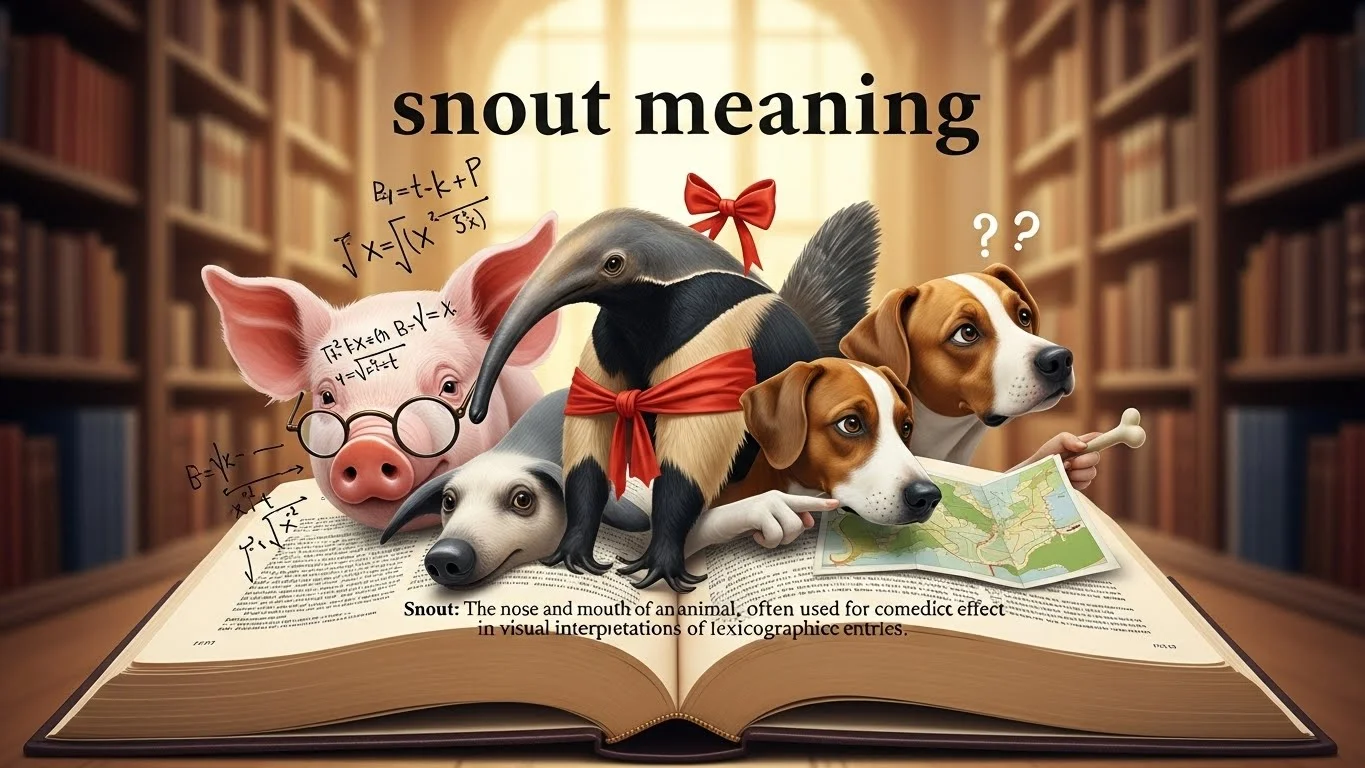
In simple terms, a snout is the long, projecting nose and mouth of an animal.
Snout in Animals
In animals, a snout refers to the front part of the face that includes the nose, mouth, and sometimes jaws.
Snout in Mammals
Mammals such as pigs, dogs, bears, and elephants are commonly described as having snouts.
Snout in Biology
In biology, the snout is an anatomical feature used for breathing, smelling, feeding, or digging.
Snout in Daily Language
In everyday conversation, people use snout mainly when referring to animal features.
Snout in Figurative Speech
Figuratively, “snout” can describe something that sticks out or protrudes forward.
Snout in Descriptions
Writers often use the word snout to create clear and vivid images of animals.
Common Misunderstandings About Snout
Some people confuse snout with nose, but a snout includes both the nose and mouth area.
Difference Between Snout and Nose
A nose is a specific part for breathing and smelling, while a snout is the entire projecting facial structure.
Snout Meaning in Farming
In farming, animals like pigs use their snouts to dig, search for food, and explore their surroundings.
Snout Meaning in Wildlife
Wild animals rely on their snouts for survival, helping them detect food, danger, and mates.
Snout in Children’s Learning
Children often learn the word snout when identifying animal body parts in books or school lessons.
How to Use Snout in a Sentence
Example: “The pig used its snout to dig in the mud.”
Snout in Literature
In stories and poems, snout is used to describe animal behavior or physical traits vividly.
Snout in Descriptive Writing
Using snout adds detail and realism when describing animals in writing.
Emotional or Figurative Snout
Sometimes snout is used humorously or playfully to describe someone pushing their face forward.
Snout in Visual Media
Nature documentaries frequently mention snouts when explaining animal behavior.
Why Understanding Snout Matters
Knowing the snout meaning improves vocabulary and helps with accurate descriptions in speech and writing.
Snout in Communication
Using snout correctly avoids confusion between animal anatomy and human features.
Snout Meaning in Modern Usage
Today, snout remains a common and clear term in animal-related discussion, education, and storytelling.