
Sinch Meaning in Simple Terms
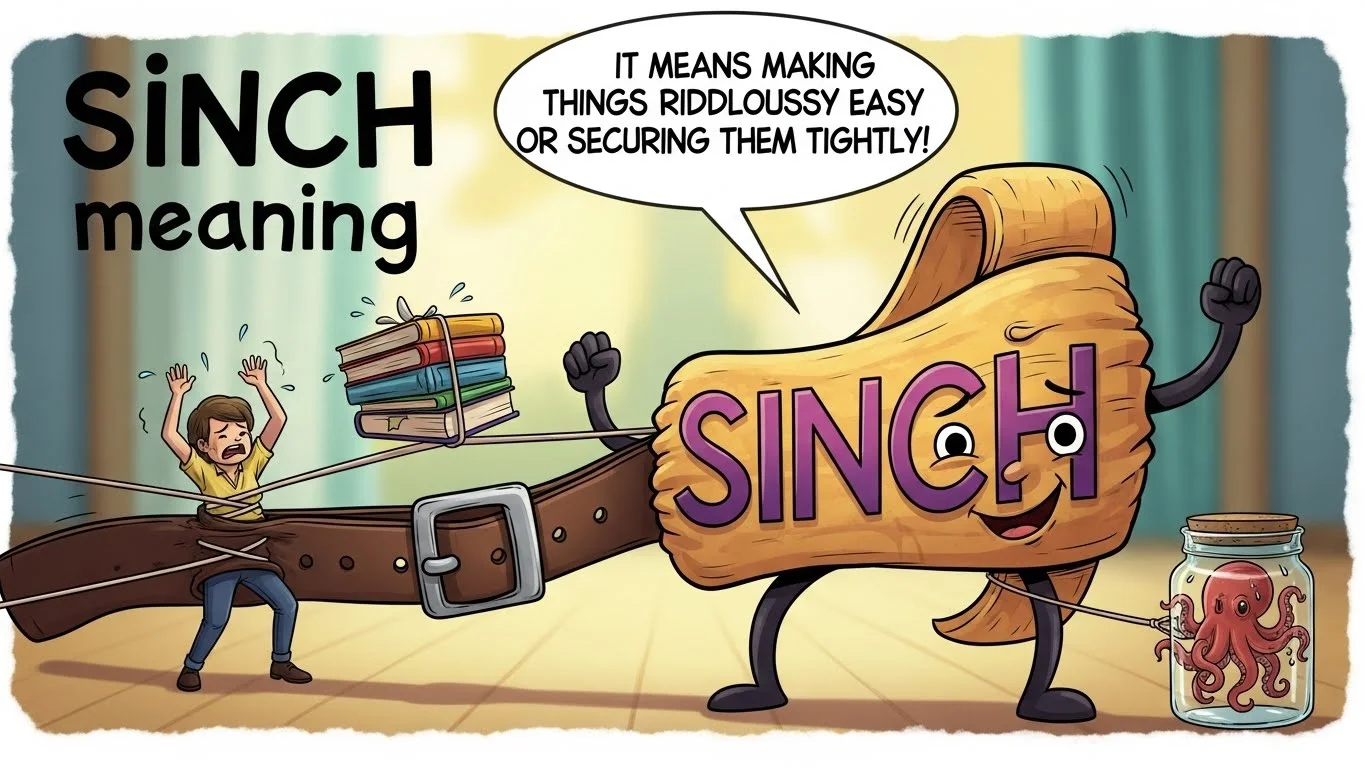
A sinch means something that is very easy to do.
If a task is a sinch, it requires little effort, time, or skill.
Example:
“Fixing that problem was a sinch.”
Sinch Meaning in Daily Conversation
In everyday speech, people use sinch to describe tasks or situations that are effortless.
Examples:
“Passing the test was a sinch.”
“The instructions made it a sinch to assemble.”
It adds a casual, confident tone to the sentence.
Sinch Meaning as a Noun
As a noun, sinch refers to an easy task or situation.
Example:
“The job was a sinch for her.”
Here, sinch describes the task itself.
Sinch Meaning as an Adjective
Sometimes, sinch is used informally like an adjective.
Example:
“That was sinch work.”
Although informal, it’s widely understood in casual speech.
Sinch vs Easy
Sinch: Informal, conversational
Easy: Neutral and suitable for all situations
Example:
Casual: “That was a sinch.”
Formal: “That task was easy.”
Origin of Sinch
The word sinch comes from cinch, which originally meant tightening a saddle strap. Over time, “cinch” evolved to mean something secure or guaranteed, and later something easy.
“Sinch” is a phonetic spelling that reflects spoken English.
Sinch Meaning in American English
Sinch is more common in American English, especially in casual conversations, movies, and informal writing.
It is less commonly used in formal or academic contexts.

Sinch Meaning in Modern Usage
Today, sinch is often used to:
Sound confident
Emphasize simplicity
Keep speech relaxed and friendly
It’s common in storytelling and casual explanations.
Sinch Meaning in Writing
In writing, sinch is best used in:
Dialogue
Informal blogs
Personal stories
It’s usually avoided in professional or academic writing.
Common Misunderstandings About Sinch
Some people think sinch is a typo or slang error. In reality, it’s an accepted informal spelling of “cinch” in spoken-style English.
How to Use Sinch Correctly
Use sinch when:
Speaking casually
Writing informal content
Describing something simple or effortless
Avoid it in formal documents or business emails.
Sinch Meaning in Pop Culture
Movies and TV shows often use sinch to show confidence or ease. Characters might say it to sound relaxed or experienced.
Sinch Meaning Compared to Similar Words
Similar words include:
Breeze
Piece of cake
Walk in the park
All describe tasks that are easy to complete.
Why People Use Sinch
People use sinch because it:
Sounds natural
Saves time
Feels conversational
It’s part of relaxed, everyday English.
Sinch Meaning in Spoken English
In spoken English, sinch often replaces “very easy” without changing the meaning.
Example:
“Once you know how, it’s a sinch.”
Sinch Meaning Across English Variants
Sinch is understood globally but is most commonly used in American informal speech. Other English variants may prefer “easy” or “simple.”
Summary of Sinch Meaning
Sinch means:
Very easy
Simple to do
Requiring little effort
It’s informal but widely understood.