
Scalping Meaning in Simple Terms
In simple terms, scalping means buying something and reselling it quickly for profit or taking a small gain repeatedly. The exact meaning depends on where the word is used.
Scalping Meaning in Trading
In trading, scalping refers to:
A short-term trading strategy
Making small profits from frequent trades
Holding positions for seconds or minutes
Traders use scalping to benefit from tiny price movements.
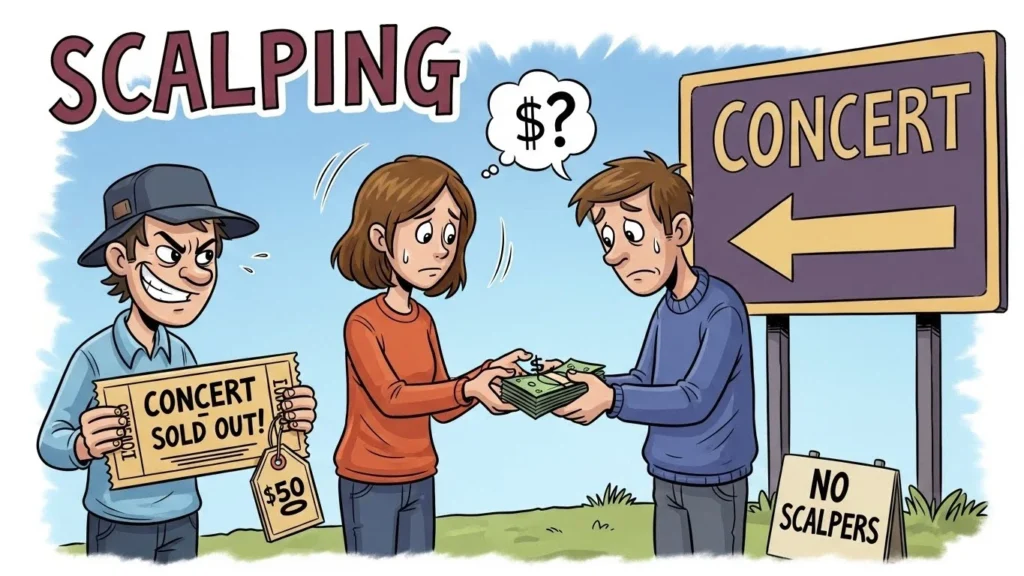
Scalping Meaning in Ticket Sales
In ticket sales, scalping means:
Buying event tickets in bulk
Reselling them at higher prices
Profiting from high demand
Ticket scalping is legal in some places and restricted in others.
Scalping Meaning in History
Historically, scalping refers to:
The act of removing a scalp
Practices during ancient and colonial conflicts
This meaning is historical and not commonly used in modern daily speech.
Scalping in Modern Usage
Today, scalping is most often used to describe:
Fast profit strategies
Resale practices
Online marketplaces and digital trading
Modern usage focuses more on economics than history.

Is Scalping Legal?
The legality of scalping depends on context:
Trading scalping is legal
Ticket scalping laws vary by country and region
Some platforms restrict scalping behavior
Always check local regulations.
Common Misunderstandings About Scalping
Thinking scalping only refers to violence
Assuming scalping is always illegal
Believing scalping guarantees profit
The meaning depends heavily on context.
Examples of Scalping in Sentences
“He uses scalping as a trading strategy.”
“Ticket scalping drove prices higher.”
“Scalping requires speed and discipline.”
Pros and Cons of Scalping
Pros:
Quick results
Frequent opportunities
Cons:
High stress
Requires skill and fast decisions
Scalping is not suitable for everyone.

Summary of Scalping Meaning
Scalping means:
Quick buying and selling for small profits
A strategy in trading and resale markets
A term with historical roots
Context-dependent in meaning