

What Does Refinance Mean in Simple Terms?
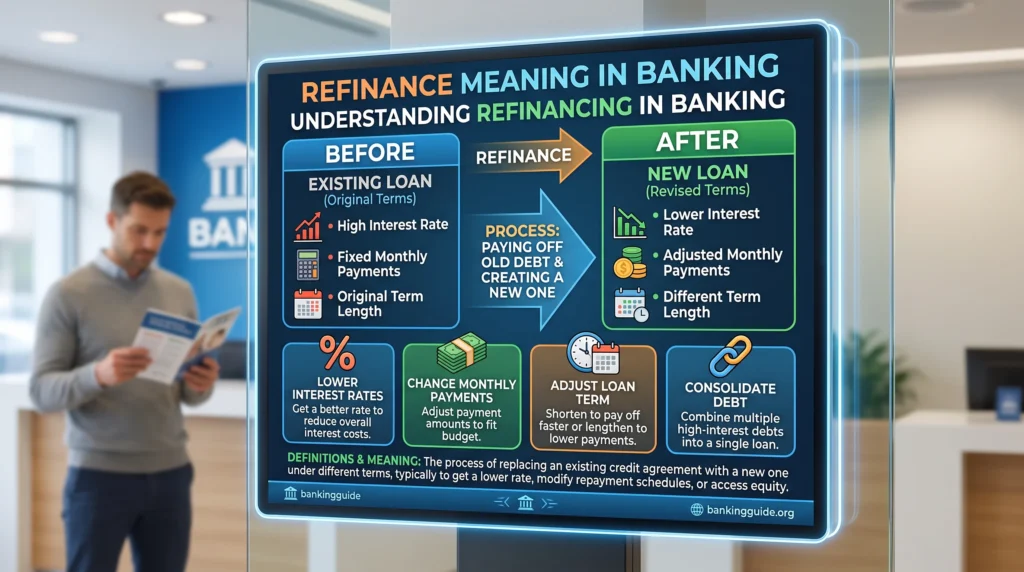
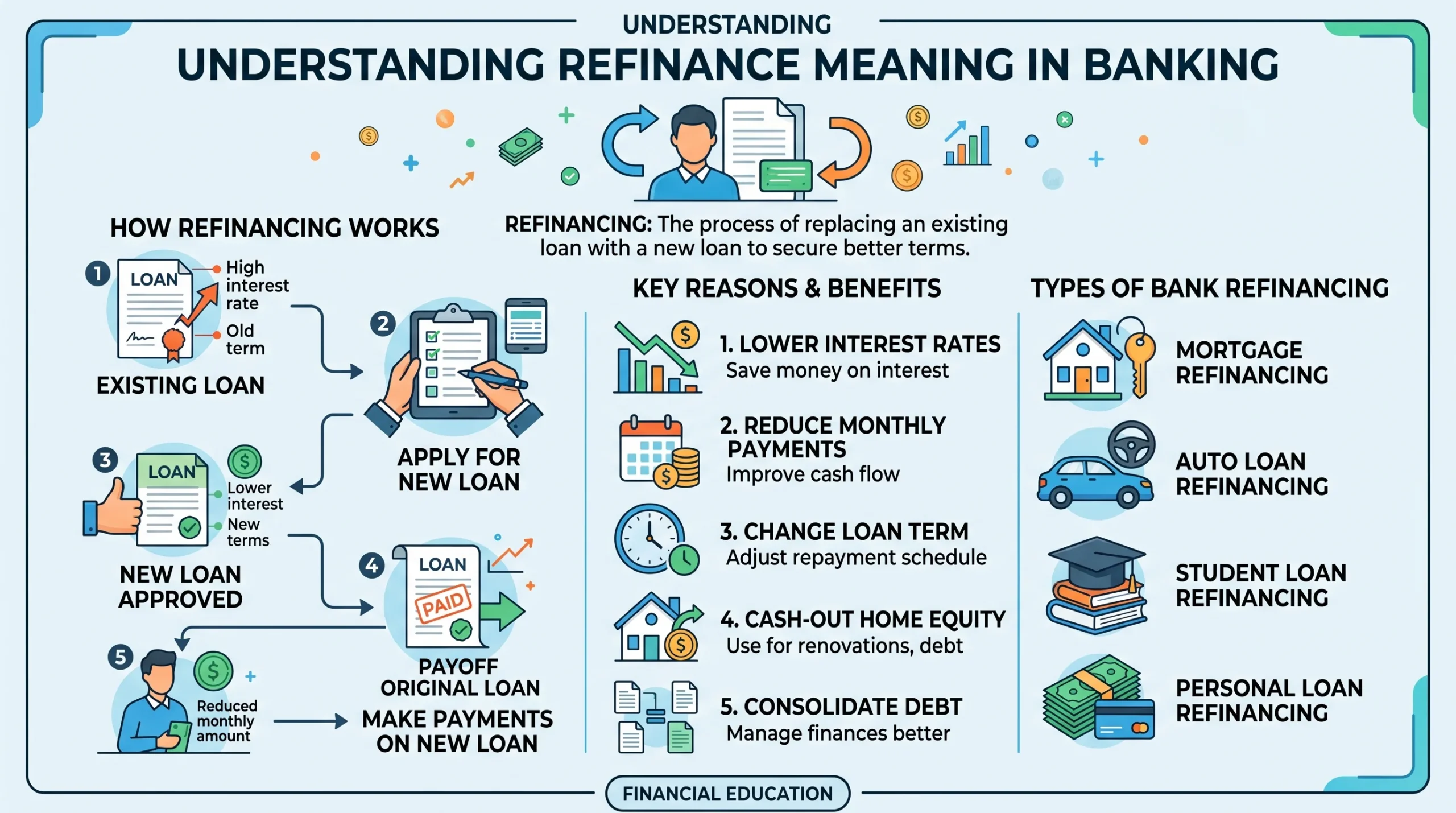
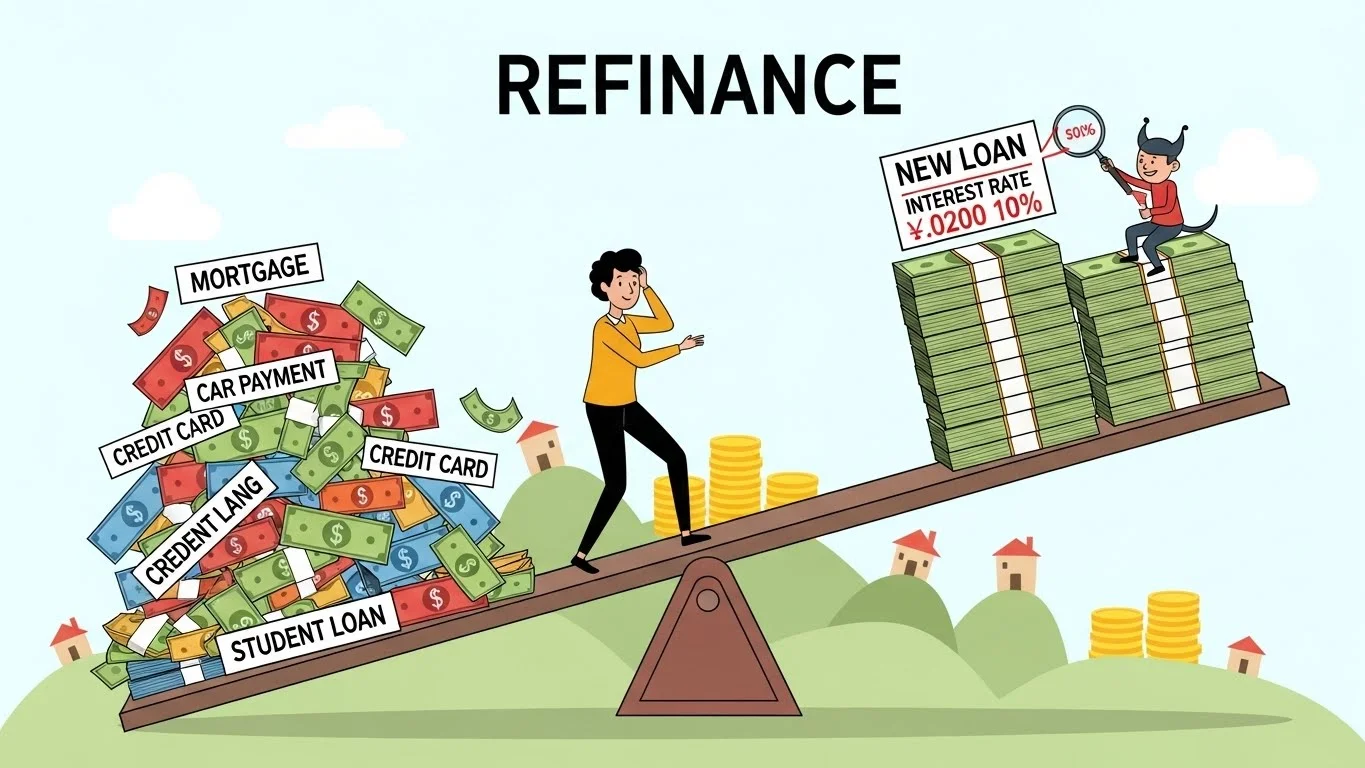
In simple terms, refinance means replacing your current loan with a new loan that has better terms. The new loan pays off the old one, and you continue making payments under the new agreement. People refinance to save money, lower their monthly payments, reduce interest rates, or change the length of their loan.
Example:
If you have a home loan with a 7% interest rate and qualify for a new loan at 5%, refinancing could lower your monthly payments and reduce the total interest you pay.
Refinance Meaning in Banking
In banking, refinancing is the process of replacing an existing loan with a new one issued by the same bank or a different lender. Banks offer refinancing to help customers secure lower interest rates, adjust repayment terms, or consolidate debt into a more manageable loan.
Example:
A customer refinances a mortgage through another bank offering lower interest rates than the original lender.
Refinance Meaning in Personal Finance
In personal finance, refinancing is a financial strategy used to improve the terms of an existing loan. Individuals may refinance mortgages, auto loans, student loans, or personal loans to reduce borrowing costs or better fit their financial goals.
Example:
Someone refinances a personal loan after improving their credit score and qualifies for a lower interest rate.
Refinance Meaning in Home Loans
For home loans, refinancing means replacing your current mortgage with a new mortgage that offers better terms. Homeowners often refinance to lower monthly payments, reduce interest costs, shorten the loan term, or access home equity through a cash-out refinance.
Example:
A homeowner refinances a 30-year mortgage into a 15-year loan to pay off the home sooner.
Refinance Meaning in Auto Loans
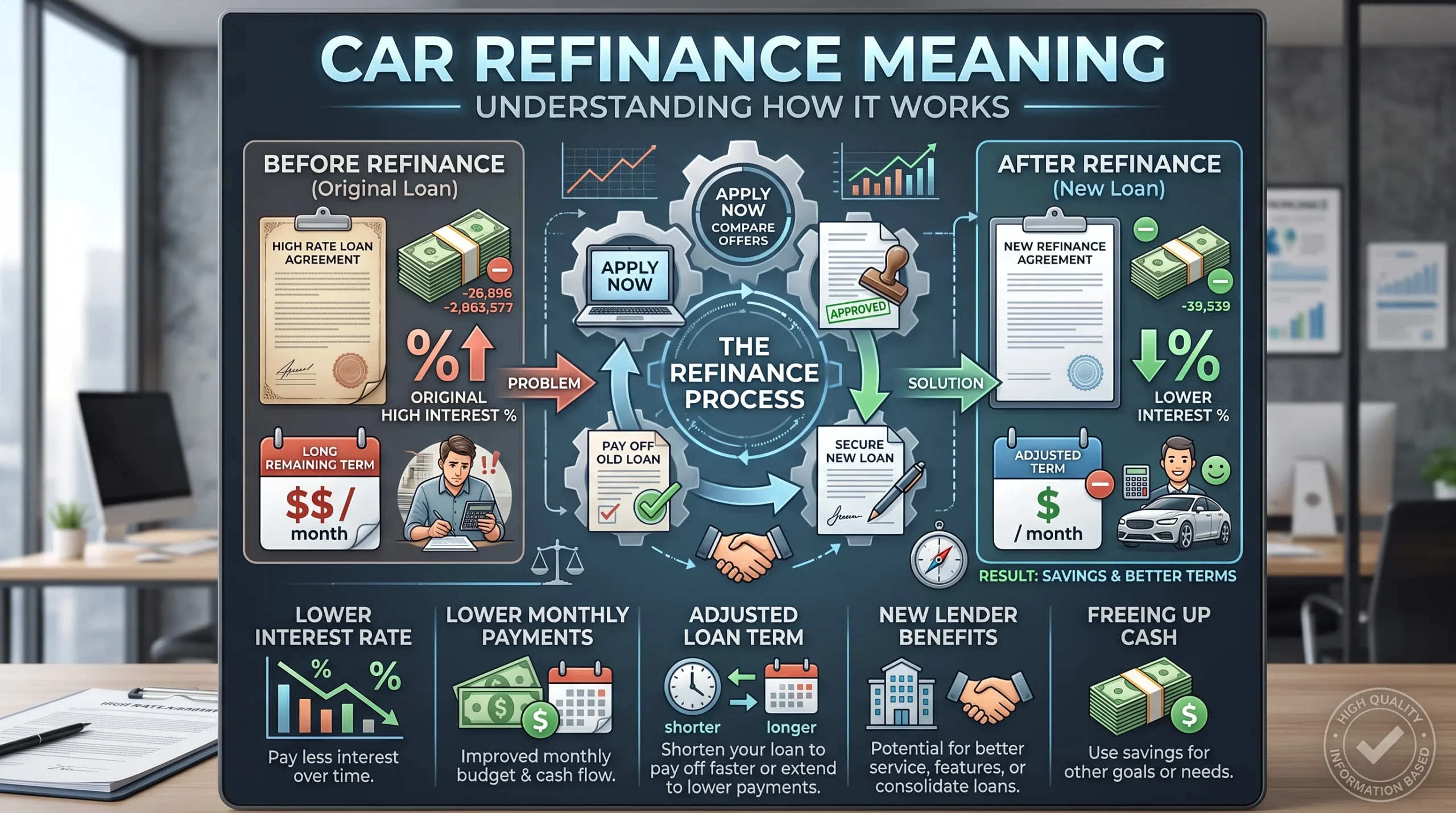
Auto loan refinancing means replacing your existing car loan with a new one that offers more favorable terms. This can reduce monthly payments, lower the interest rate, or shorten the repayment period.
Example:
After building better credit, a driver refinances their car loan and saves money on interest.
Refinance Meaning in Student Loans
Student loan refinancing involves taking out a new loan to pay off one or more existing student loans. Borrowers usually refinance to secure a lower interest rate, simplify repayment, or reduce monthly payments.
Example:
A graduate refinances multiple student loans into one loan with a fixed lower interest rate.
Refinance Meaning in Business Loans
Businesses refinance loans to replace existing debt with new financing that offers better terms. This helps companies lower borrowing costs, improve cash flow, or extend repayment periods.
Example:
A small business refinances its equipment loan to reduce monthly expenses and free up working capital.
How Refinancing Works
Refinancing follows a straightforward process:
- Apply for a new loan with a lender.
- The lender reviews your income, credit history, and financial situation.
- If approved, the new loan pays off your existing loan.
- You begin making payments under the new loan agreement.
The goal is usually to obtain better loan terms than the original financing.

Reasons People Choose to Refinance
People refinance for several reasons, including:
- Lower interest rates
- Smaller monthly payments
- Shorter repayment periods
- Switching from variable to fixed interest rates
- Accessing home equity
- Consolidating multiple debts
- Improving overall financial flexibility
Benefits of Refinancing
Refinancing can provide several financial advantages:
- Lower monthly loan payments
- Reduced interest costs over the life of the loan
- Faster loan repayment
- Improved cash flow
- Easier debt management
- Opportunity to consolidate multiple loans
For many borrowers, refinancing can lead to significant long-term savings.
Risks of Refinancing
Although refinancing has benefits, it also comes with potential drawbacks:
- Closing costs or lender fees
- Longer repayment periods may increase total interest paid
- Temporary impact on your credit score
- Stricter qualification requirements
- Prepayment penalties on existing loans
It’s important to compare the total cost of refinancing before making a decision.
Common Misunderstandings About Refinance
Many people misunderstand refinancing. Here are a few common myths:
- Myth: Refinancing always saves money.
- Reality: Savings depend on interest rates, fees, and loan terms.
- Myth: Only homeowners can refinance.
- Reality: Car loans, personal loans, business loans, and student loans can also be refinanced.
- Myth: You need perfect credit.
- Reality: Better credit helps, but many lenders offer refinancing options for a range of credit profiles.
Refinance vs Loan Modification
Although they sound similar, refinancing and loan modification are different.
| Refinance | Loan Modification |
|---|---|
| Replaces your current loan | Changes the terms of your existing loan |
| Often involves a new lender | Usually stays with the same lender |
| Requires qualifying for a new loan | Typically offered to borrowers facing financial hardship |
| Can lower interest rates or change loan length | May reduce payments without replacing the loan |
Refinance Meaning in Daily Life
In everyday life, refinancing simply means finding a better financial deal on money you’ve already borrowed. It allows people to reduce expenses, improve cash flow, or better manage their debt.
Example:
A family refinances their home loan after interest rates drop, saving hundreds of dollars each month.
When Refinancing Makes Sense
Refinancing is often a smart financial move when:
- Interest rates have significantly decreased.
- Your credit score has improved.
- You want lower monthly payments.
- You plan to stay in the home long enough to recover refinancing costs.
- You want to pay off debt faster.
When Refinancing Is Not a Good Idea
Refinancing may not be worthwhile if:
- Closing costs outweigh the savings.
- You plan to sell the property soon.
- Interest rates are higher than your current loan.
- You’re close to paying off the loan.
- Your financial situation doesn’t qualify you for better terms.
Refinance Meaning in Long-Term Planning
As part of long-term financial planning, refinancing can help borrowers reduce interest expenses, improve budgeting, accelerate debt repayment, and strengthen overall financial health. Used wisely, refinancing can contribute to achieving long-term financial goals such as homeownership, retirement savings, or debt reduction.
Refinance Meaning in Modern Finance
In modern finance, refinancing is a widely used financial tool by individuals, businesses, and governments to optimize borrowing costs. Advances in online lending, digital banking, and competitive financial markets have made refinancing more accessible than ever before.
Key Factors to Consider Before Refinancing
Before refinancing, carefully evaluate:
- Current interest rates
- Your credit score
- Loan fees and closing costs
- Remaining loan balance
- Loan repayment period
- Monthly payment changes
- Total interest paid over the life of the loan
- Your long-term financial goals
Comparing multiple lenders can help you find the most cost-effective refinancing option.
Why Understanding Refinance Matters
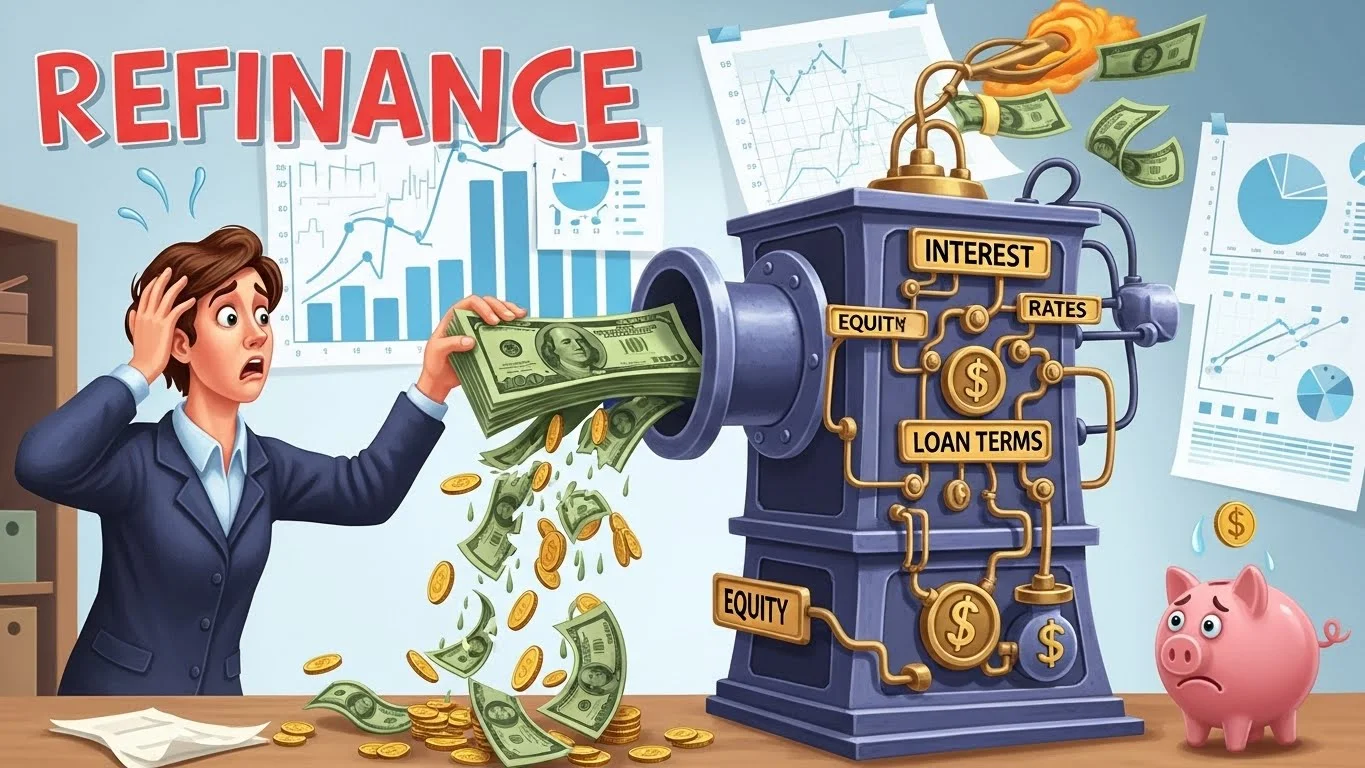
Understanding what refinancing means empowers borrowers to make informed financial decisions. Whether you’re refinancing a mortgage, car loan, student loan, personal loan, or business loan, knowing how refinancing works can help you lower borrowing costs, improve cash flow, and better manage debt. By carefully evaluating your options and comparing lenders, you can determine whether refinancing aligns with your financial goals and provides long-term savings.