
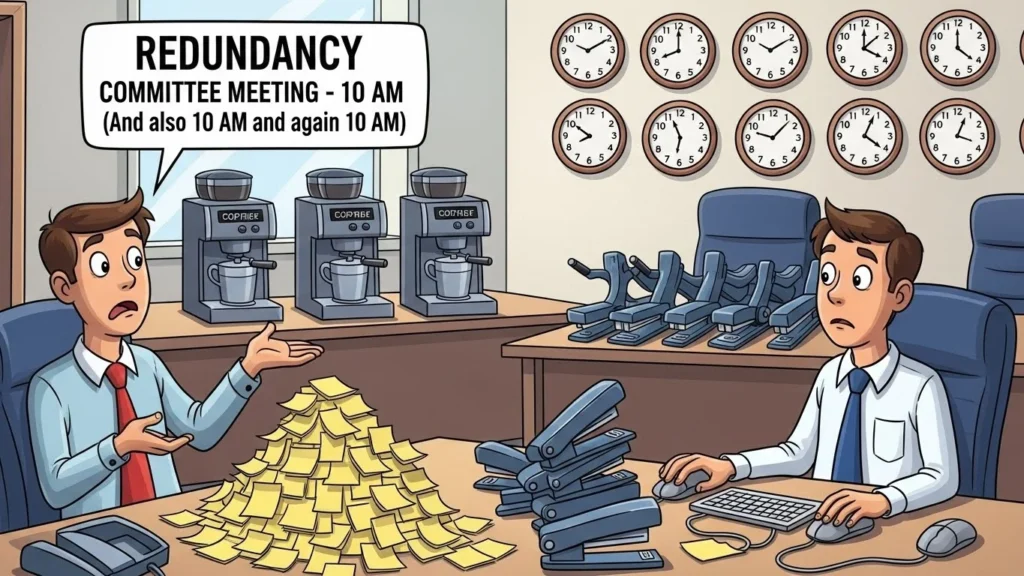

What Does Redundancy Meaning
• The state of being unnecessary or repetitive
• Having more than what is needed
• Depends on the situation or field
Origin of the Word Redundancy Meaning
• Comes from Latin redundare meaning “to overflow”
• Entered English in the 17th century
• Originally referred to excess or surplus
Redundancy in Simple Terms
• Something extra or repeated
• Not always needed
• Sometimes helpful, sometimes wasteful
Redundancy in Language
• Repeating the same idea unnecessarily
• Can weaken writing if overused
• Sometimes used for emphasis
Examples of Redundancy in Writing
• “Free gift” (gift is already free)
• “Advance planning” (planning implies advance)
• “Each and every” (often unnecessary repetition)
Redundancy in the Workplace
• Often refers to job loss due to restructuring
• Happens when roles are no longer needed
• Not related to employee performance
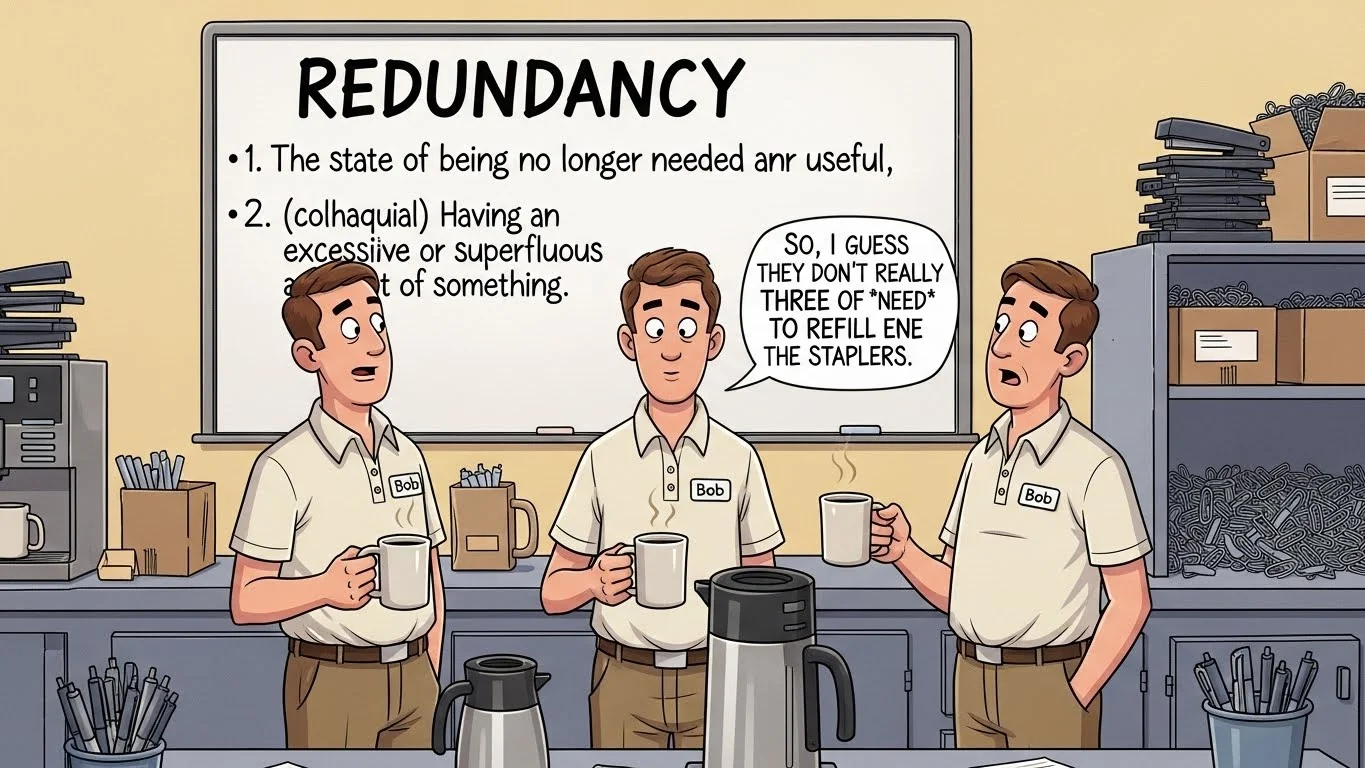
Redundancy vs Being Fired
• Redundancy is role-based
• Being fired is performance-based
• Redundancy is usually not personal
Redundancy in Technology
• Backup systems to prevent failure
• Extra components for safety
• Increases reliability
Examples of Technical Redundancy
• Backup servers
• Duplicate power supplies
• Data backups
Emotional Meaning of Redundancy
• Can cause stress and uncertainty at work
• Neutral in technical contexts
• Negative in writing if overused
Common Misunderstandings About Redundancy
• Redundancy is not always bad
• Not the same meaning in all contexts
• Can be intentional and useful
When Redundancy Is Useful
• For safety and reliability
• In critical systems
• To prevent total failure
When Redundancy Is a Problem
• In clear communication
• When it wastes time or resources
• When it causes confusion
Redundancy in Modern Usage
• Common in business and technology
• Frequently discussed in employment law
• Important in communication and design
Why Understanding Redundancy Meaning Matters
• Helps avoid unclear writing
• Clarifies workplace discussions
• Improves decision-making in systems and processes