


Profusely Meaning in Simple Terms
In simple terms, profusely means in a large, abundant, or excessive way. It describes actions, feelings, or things that are more than usual.
Profusely Meaning as an Adverb
Profusely is an adverb used to modify verbs or actions to show intensity, abundance, or excess.
Example: “He apologized profusely for the mistake.”
Profusely Meaning in Emotions
Profusely is often used to describe emotions expressed strongly, such as:
Apologizing
Thanking
Blushing or sweating
Expressing gratitude
It emphasizes the depth or intensity of the feeling.
Profusely Meaning in Physical Actions
Physical actions done profusely include:
Sweating heavily
Bleeding
Pouring or spilling
Writing or speaking excessively
Example: “She was sweating profusely after the workout.”
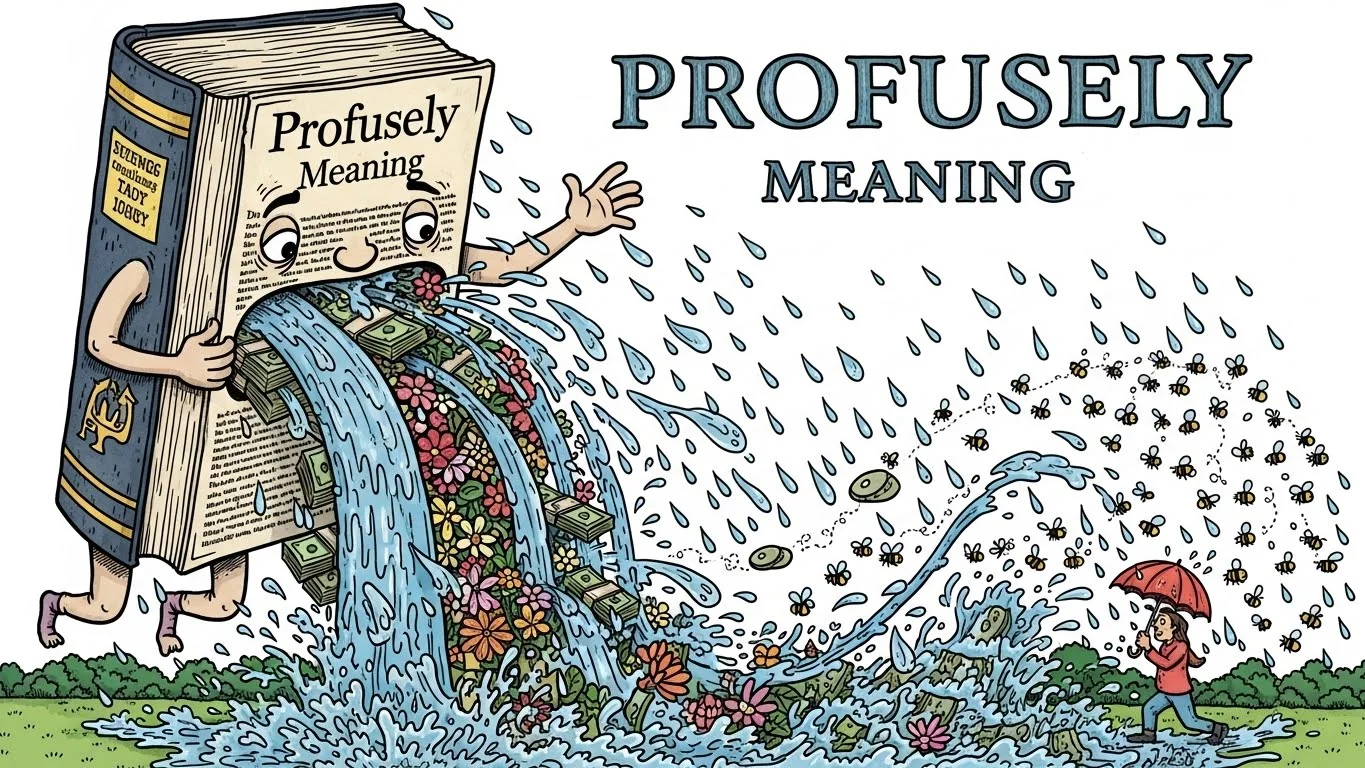
Profusely in Writing and Speech
Enhances descriptive writing
Shows strong emotions or reactions
Makes speech or text more vivid and expressive
Example: “The flowers bloomed profusely in the garden.”
Common Misunderstandings About Profusely
It does not mean carelessly
Not always negative; can be positive
Refers to intensity or abundance, not frequency
Context determines whether it is positive, neutral, or negative.
Examples of Profusely in Sentences
“He thanked her profusely for her help.”
“The faucet leaked profusely after the storm.”
“She blushed profusely when praised.”
“Rain fell profusely throughout the night.”

Why Understanding Profusely Meaning Matters
Knowing the profusely meaning helps:
Communicate emotions clearly
Enhance descriptive writing
Avoid misunderstandings in speech
Interpret literature or media accurately