
Ontology Meaning in Simple Terms
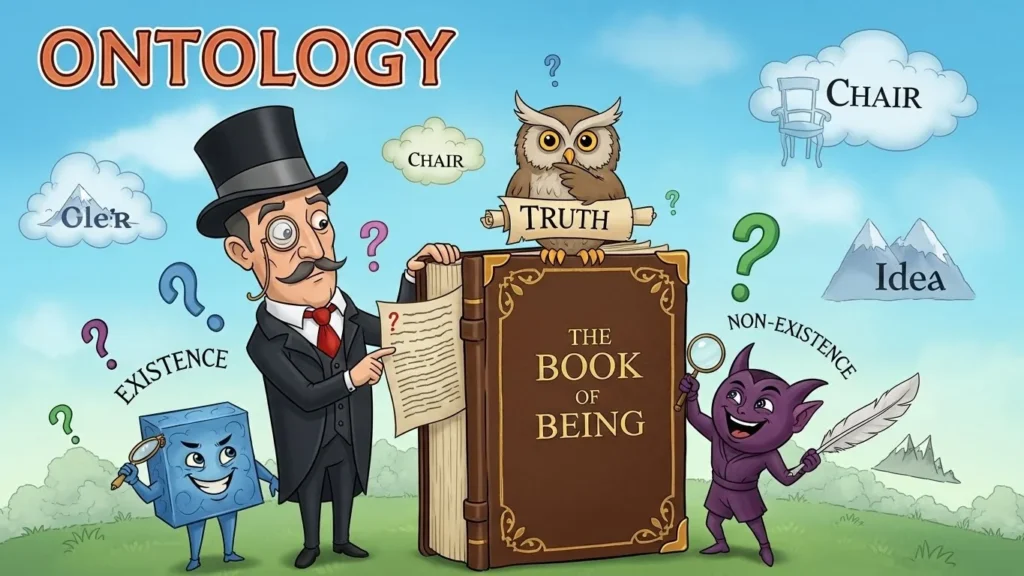
Ontology is the study or theory of being, existence, and reality.
In simple words, ontology asks questions like:
What exists?
How do things exist?
How are things categorized?
Ontology Meaning in Philosophy
In philosophy, ontology is a branch that explores:
The nature of existence
The relationship between objects and their properties
Categories of being
It deals with questions like “What is real?” and “What does it mean to exist?”
Ontology Meaning in Daily Life
Even outside philosophy, ontology influences how we:
Classify objects or ideas
Understand categories in knowledge
Think about what is real or important
Example: Organizing your personal items by type reflects a practical form of ontology.
Ontology Meaning in Computer Science
In computer science, ontology refers to:
Structured representation of knowledge
How concepts and categories relate
Creating frameworks for AI and data systems
Example: A medical ontology organizes diseases, symptoms, and treatments for software systems.
Ontology Meaning in Knowledge Management
In knowledge management, ontology is used to:
Organize information
Improve search and retrieval
Map relationships between concepts
It helps systems “understand” and connect data.
Ontology Meaning in Modern Usage
Today, ontology can describe:
Conceptual frameworks
Categorization methods
Philosophical or technical approaches
It is used in philosophy, AI, data science, and academic research.
Ontology Meaning vs Metaphysics
Ontology: Focuses specifically on the study of being and existence
Metaphysics: A broader branch exploring reality, causality, time, and space
Ontology is a key part of metaphysics.
Ontology Meaning in Logic and Semantics
Ontology helps:
Define concepts precisely
Avoid ambiguity in reasoning
Establish relationships between ideas
It is essential in semantic web technologies and AI reasoning.
Ontology Meaning in Religion and Spirituality
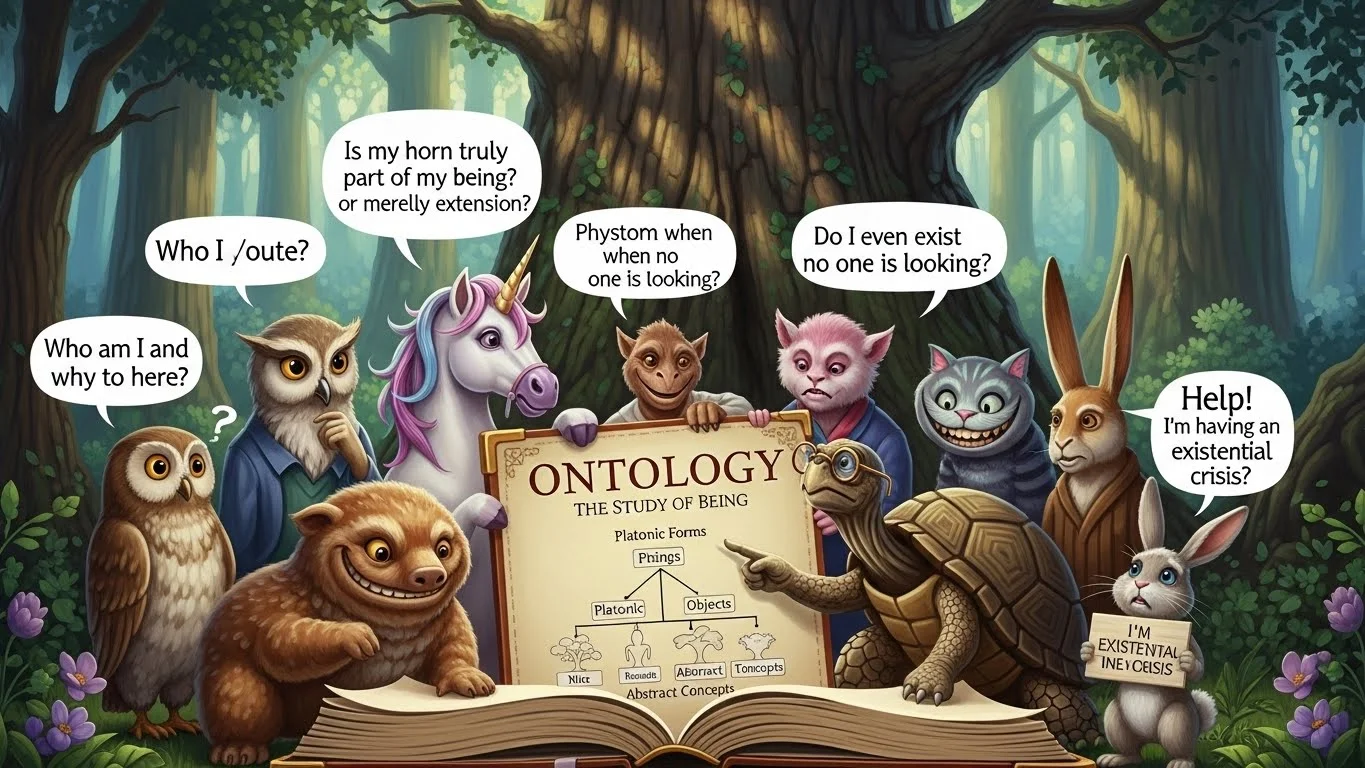
In religion, ontology examines:
The nature of divine existence
The reality of souls or spirits
How humans relate to ultimate reality
It helps interpret spiritual beliefs logically.
Ontology Meaning in Science
In science, ontology assists in:
Defining entities in biology, physics, and social sciences
Categorizing observable phenomena
Ensuring consistent communication among researchers
It brings clarity to complex systems.
Ontology Meaning in Philosophy of Mind
In the philosophy of mind, ontology studies:
The nature of consciousness
How mental states exist
The relationship between mind and body
This helps in psychology, AI, and cognitive science.
Ontology Meaning in Data Science
In data science, ontologies are used to:
Label datasets
Link related information
Improve AI understanding of context
Example: E-commerce platforms use ontologies to categorize products effectively.
Common Misunderstandings About Ontology Meaning
Some think ontology is only about philosophy; it is also practical in technology.
Others confuse it with metaphysics or epistemology; ontology focuses on being and existence.
It does not mean just “a list of things” but rather a structured understanding of entities and their relationships.
How to Understand Ontology by Context
To understand ontology:
Check if the context is philosophical, technological, or academic
Identify whether it deals with concepts, entities, or relationships
Focus on how categories and existence are being discussed
Why Ontology Matters
Ontology matters because it:
Helps organize knowledge
Clarifies the nature of reality
Improves communication in philosophy, science, and technology
It provides a foundation for understanding complex systems.

Summary of Ontology Meaning
Ontology refers to:
The study of being and existence
Categorization and relationships of entities
Philosophical, scientific, and technological frameworks
It is both a theoretical and practical concept used across multiple fields.