What Does Mania Meaning
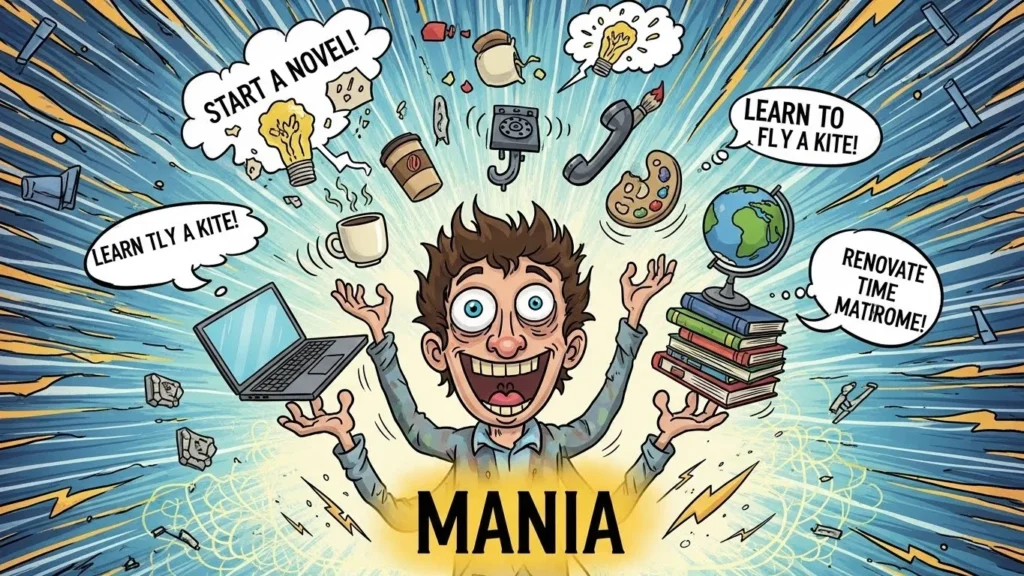
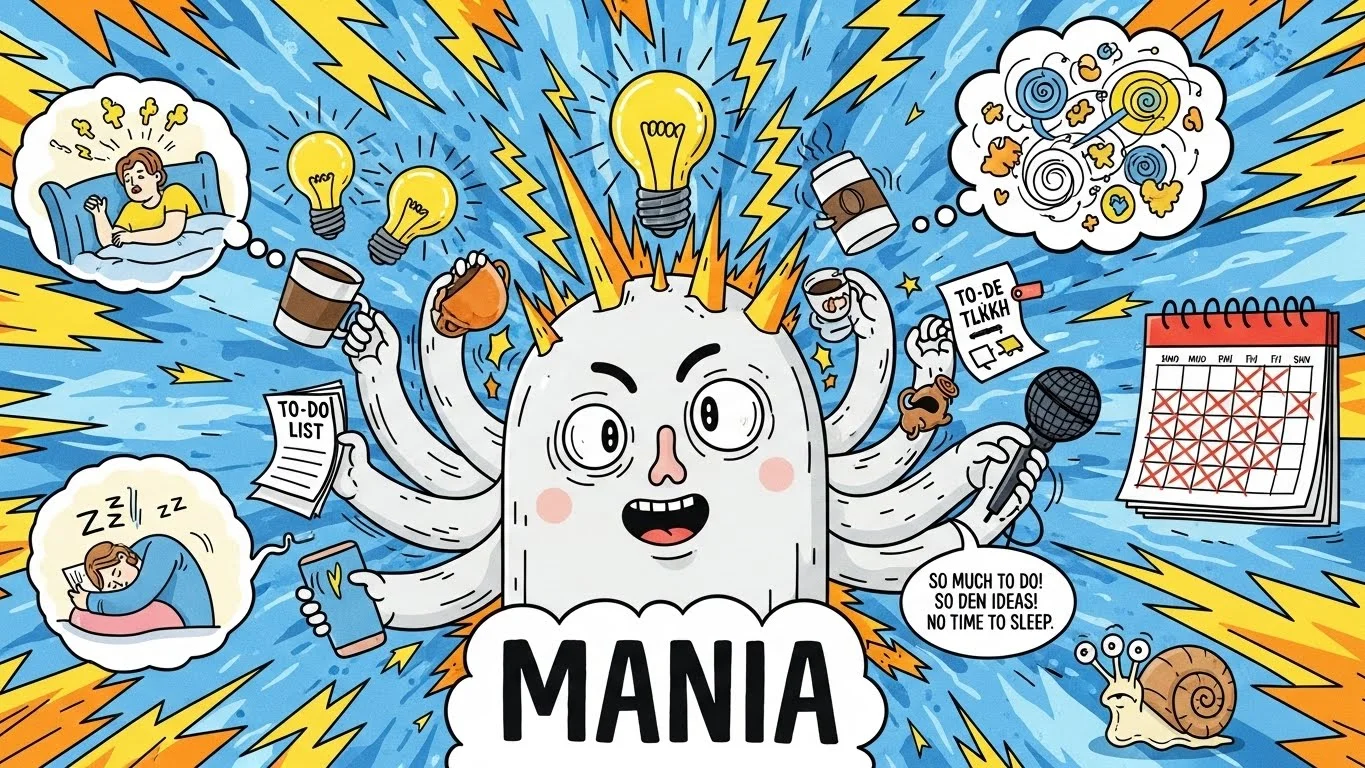
• A mental state with heightened energy or mood
• Can involve impulsive or risky behavior
• Sometimes used to describe intense enthusiasm
Origin of the Word Mania Meaning
• Comes from Greek mania meaning “madness”
• Historically used in medicine and literature
• Adopted in modern psychiatry
Mania Meaning in Simple Terms
• Feeling extremely energetic or excitable
• Acting impulsively or unusually
• Can be temporary or linked to a condition
Types of Mania
• Hypomania – mild and less severe
• Acute mania – intense and disruptive
• Mixed mania – features of mania and depression
Mania in Daily Life
• Sudden bursts of energy or excitement
• Obsessive focus on a task or hobby
• Extreme enthusiasm for activities
Mania in Mental Health
• Key symptom of bipolar disorder
• Can affect sleep, judgment, and behavior
• May require professional intervention
Emotional Traits During Mania
• Elevated or euphoric mood
• Irritability or agitation
• Restlessness and impulsivity
Causes of Mania
• Bipolar disorder or other psychiatric conditions
• Sleep deprivation or stress
• Substance use or medication side effects
Mania vs Excitement
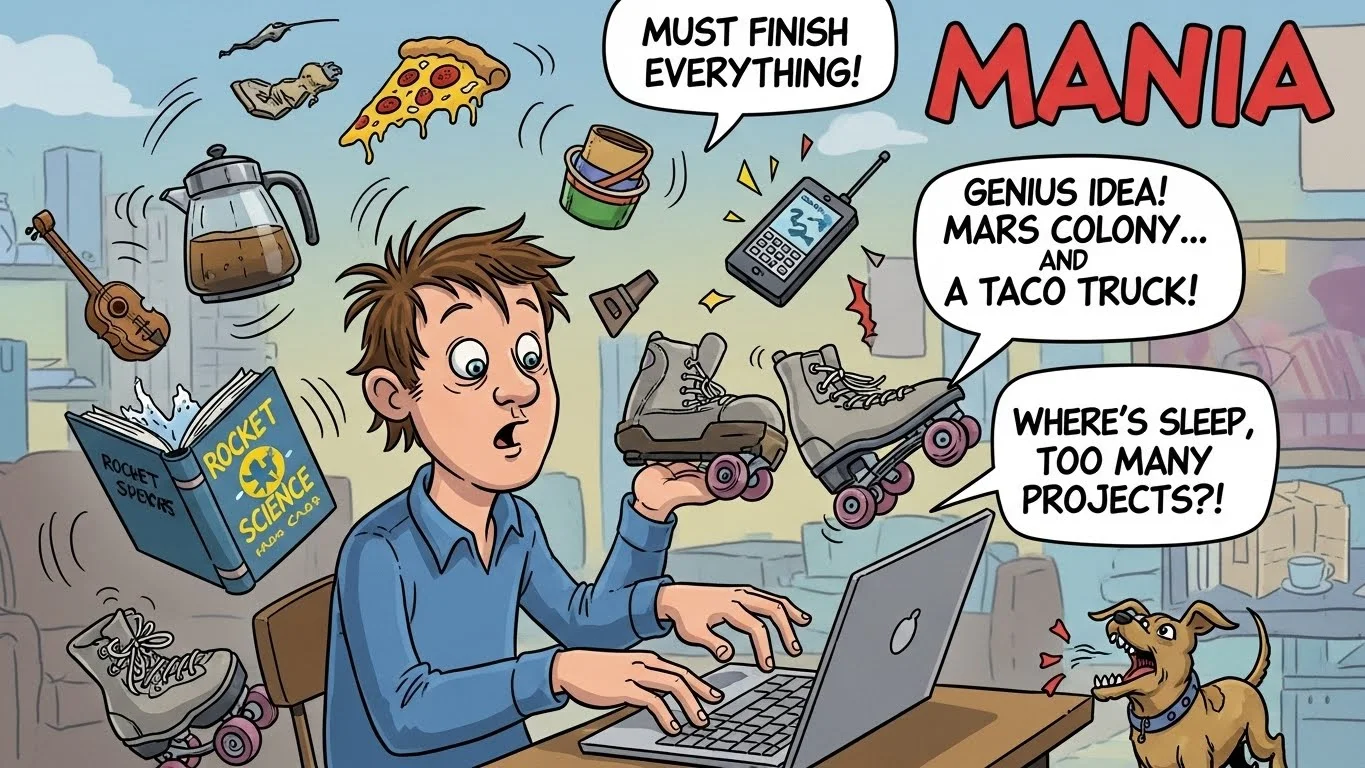
• Excitement is normal and temporary
• Mania is intense, prolonged, and may disrupt life
• Medical evaluation needed for true mania
Mania in Pop Culture
• Often depicted in movies or TV shows
• Can exaggerate behaviors for dramatic effect
• Used metaphorically to describe obsession
Mania and Risky Behavior
• Overspending or reckless actions
• Hypersexuality or impulsivity
• Poor decision-making during episodes
Common Misunderstandings About Mania
• Not just “being happy”
• Can be misunderstood as energy or motivation
• Requires context to identify medically
Examples of Mania Usage
• Intense work periods or creative bursts
• Obsessive hobby or fandom involvement
• Psychiatric diagnosis context
When to Use the Term Mania
• Discussing mental health conditions
• Describing extreme enthusiasm or obsession
• Explaining behavioral changes or episodes
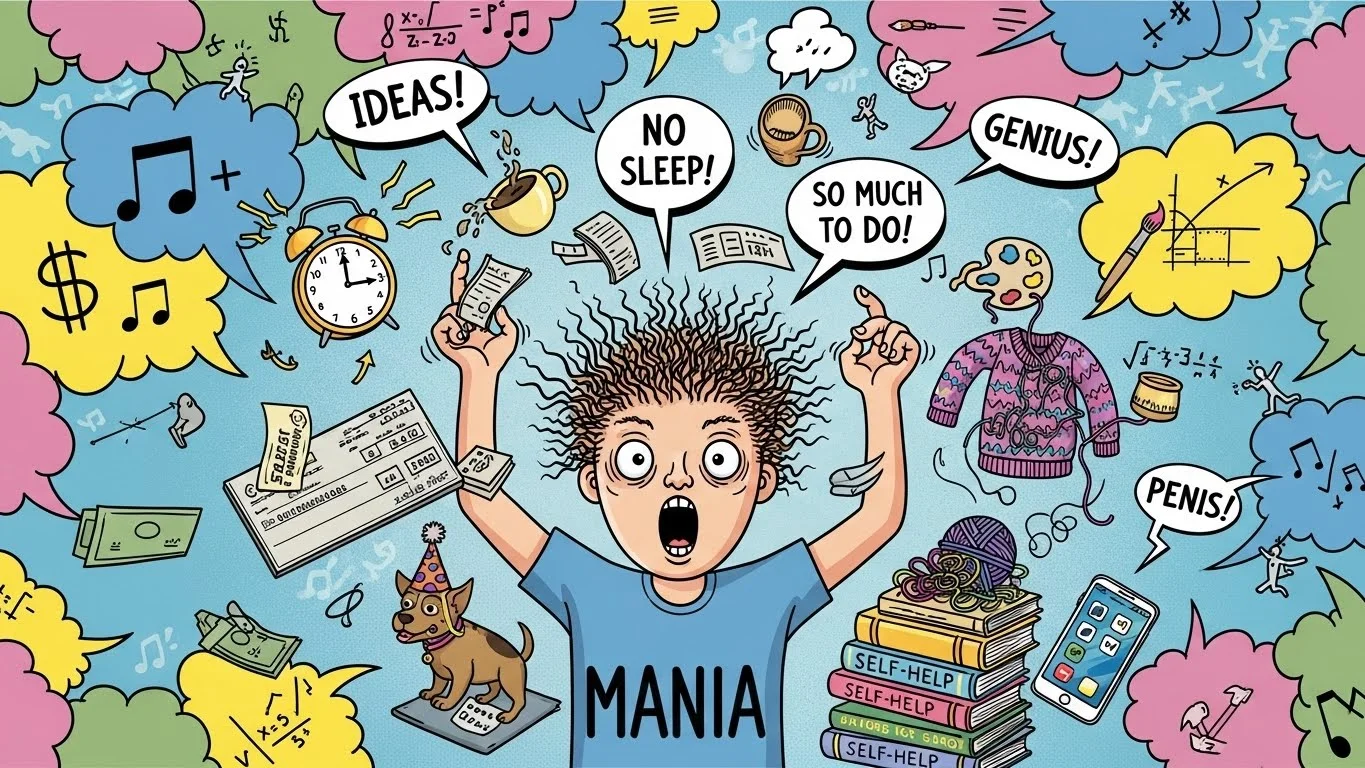
Mania in Modern Usage
• Used in psychology, social media, and informal conversation
• Can describe excitement, obsession, or medical episodes
• Awareness helps reduce stigma