
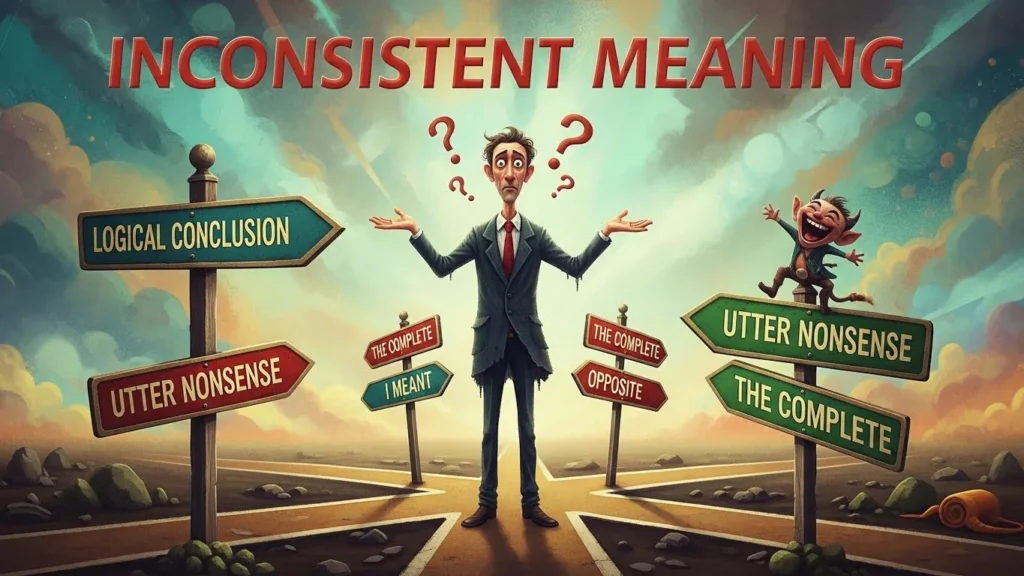

What Does Inconsistent Meaning
• Not staying the same over time
• Changing unpredictably or irregularly
• Lacking reliability or uniformity
Origin of the Word Inconsistent Meaning
• Comes from Latin inconsistens meaning “not standing together”
• Adopted into English in the 16th century
• Used to describe varying behavior or outcomes
Inconsistent Meaning in Simple Terms
• Unpredictable or irregular actions
• Things that do not match expectations
• Can apply to people, results, or statements
Inconsistent vs Consistent
• Consistent means reliable and steady
• Inconsistent shows variation or unpredictability
• Context determines which trait applies
Inconsistent in Daily Life
• Forgetting tasks or appointments
• Changing opinions frequently
• Varying moods or behavior
Inconsistent in Work Performance
• Meeting deadlines irregularly
• Producing uneven quality of work
• Fluctuating productivity

Inconsistent in Communication
• Saying different things at different times
• Sending mixed messages
• Confusing the listener or reader
Inconsistent in Behavior
• Acting differently in similar situations
• Reacting unpredictably to events
• Difficult for others to anticipate
Emotional Meaning of Inconsistent
• Can create frustration or uncertainty
• May indicate indecision
• Often interpreted negatively in relationships
Inconsistent in Education
• Irregular study habits
• Uneven test performance
• Difficulty maintaining academic progress
Inconsistent in Relationships
• Changing levels of attention or affection
• Unreliable communication
• Can cause misunderstandings
Common Misunderstandings About Inconsistent
• Not always intentional
• Can be due to external factors
• Context is important for interpretation
Examples of Inconsistent Behavior
• Frequently changing schedules
• Giving different answers to same questions
• Showing different moods each day
When to Use the Term Inconsistent
• Describing people, actions, or results
• Explaining patterns that vary unpredictably
• Highlighting irregularities in behavior or work

Inconsistent in Modern Usage
• Used in workplace and social contexts
• Appears in performance reviews or feedback
• Common in daily conversations and media