


What Does FIFO Mean in Simple Terms
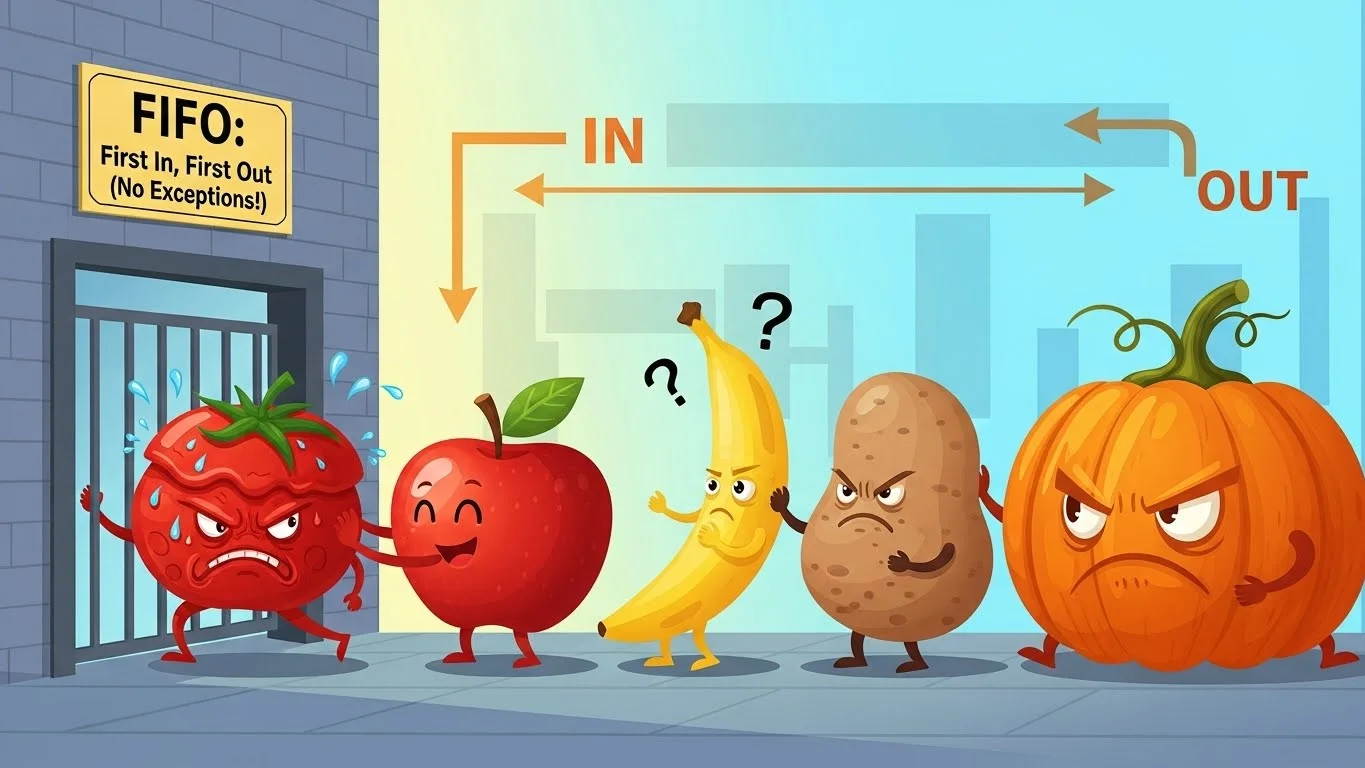
In simple terms, FIFO means “first in, first out,” where the earliest items added are the first ones used or removed.
FIFO in Accounting
In accounting, FIFO is a method used to value inventory by assuming the oldest stock is sold first.
FIFO in Inventory Management
In inventory systems, FIFO helps ensure older products are used before newer ones to avoid waste.
FIFO in Business
Businesses use FIFO to track stock flow and calculate cost of goods sold accurately.
FIFO in Daily Life
In daily life, FIFO applies to situations like standing in a queue where the first person in line is served first.
FIFO in Warehousing
Warehouses use FIFO to manage storage efficiently and reduce product expiration or damage.
FIFO in Manufacturing
Manufacturers apply FIFO to maintain product quality and consistent production flow.
FIFO Meaning in Retail
Retailers rely on FIFO to rotate stock so older products are sold before newer arrivals.
FIFO in Computing
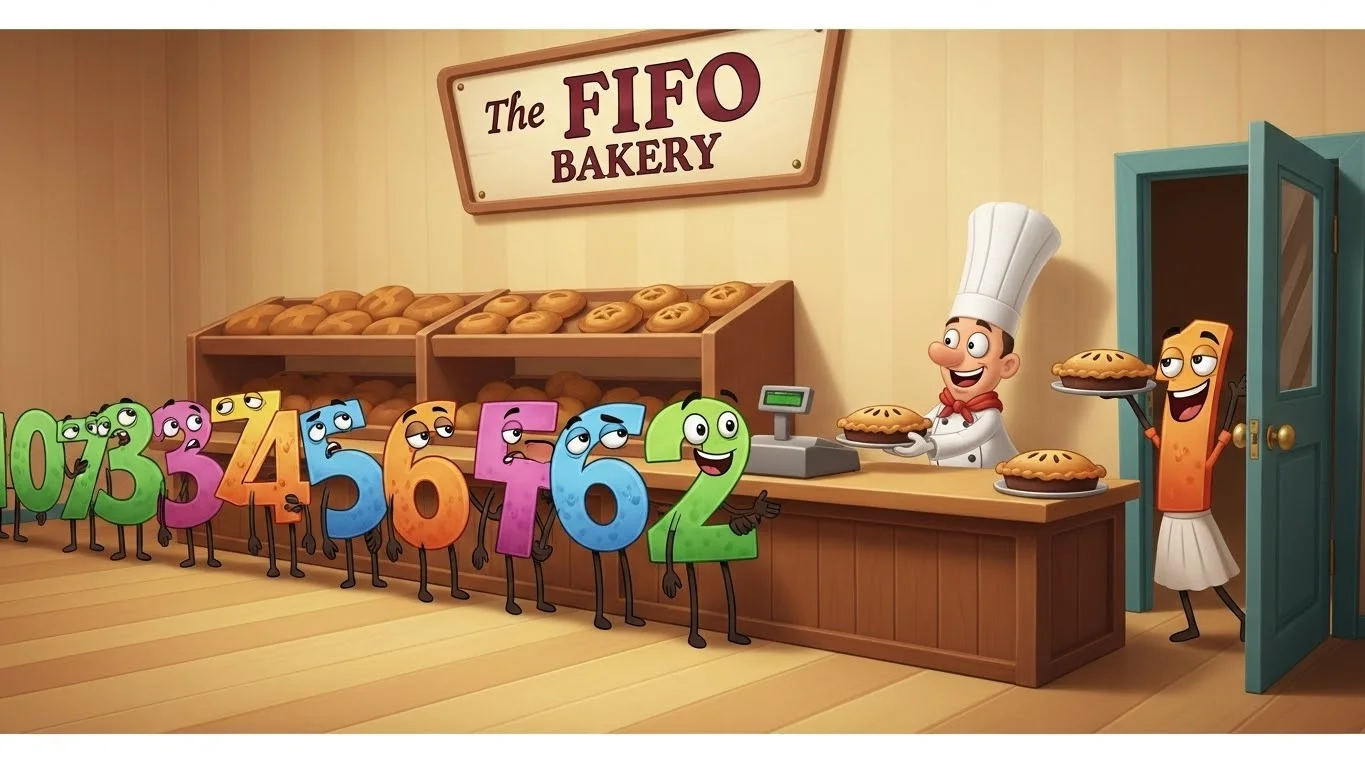
In computing, FIFO describes data processing where the first data entered is the first processed.
FIFO in Programming
In programming, FIFO is commonly used in queues and buffer management.
FIFO Meaning in Logistics
Logistics operations use FIFO to control shipment order and inventory turnover.
Common Misunderstandings About FIFO
Some think FIFO always increases profits, but its impact depends on pricing and market conditions.
Difference Between FIFO and LIFO
FIFO uses oldest items first, while LIFO uses the most recent items first.
FIFO Meaning Compared to FEFO
FIFO focuses on entry time, while FEFO prioritizes earliest expiration dates.
Advantages of Using FIFO
FIFO improves accuracy, reduces waste, and aligns with natural stock flow.
Disadvantages of FIFO
In some cases, FIFO can increase taxable income during inflation.
FIFO Meaning in Financial Statements
FIFO affects inventory valuation, profit margins, and reported income.
FIFO Meaning in Cost Calculation
Costs are calculated using older prices, often reflecting more realistic inventory value.
When FIFO Is Most Useful
FIFO is ideal for perishable goods, retail stock, and transparent accounting.
Why Understanding FIFO Matters
Understanding the FIFO meaning helps improve inventory control, financial clarity, and decision-making.