

Cliffhanger Meaning in Simple Terms
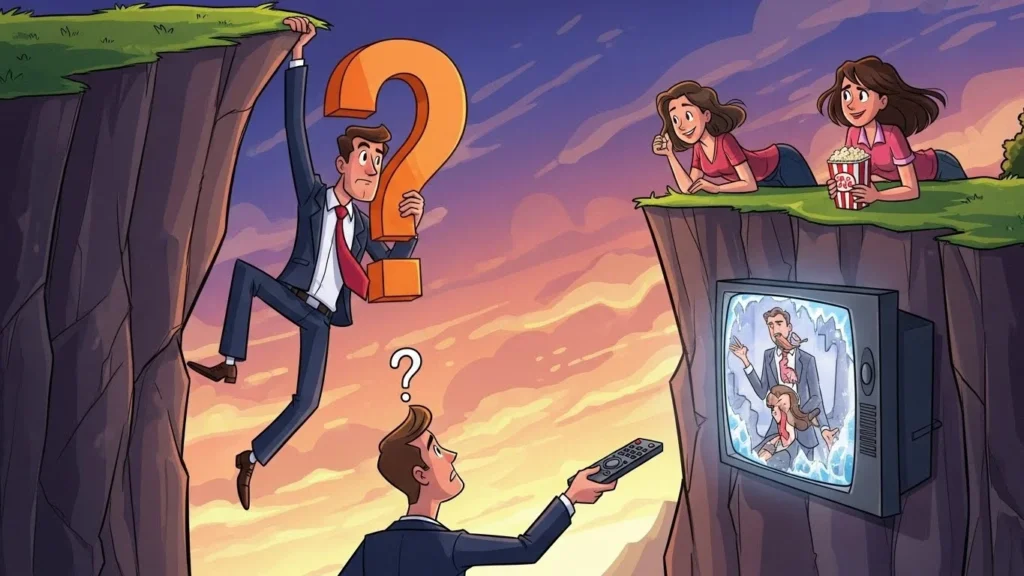
A cliffhanger is a story ending that leaves the outcome uncertain or unresolved, making the audience eager to find out what happens next.
Example:
A hero is hanging off a cliff at the end of a chapter—literally or figuratively—creating suspense.
Cliffhanger Meaning in Stories
In books, cliffhangers are used to:
Keep readers engaged
Build suspense at the end of chapters
Encourage readers to continue to the next part
Authors often use them in serial novels, thrillers, and adventure stories.
Cliffhanger Meaning in Movies
In movies or TV shows, cliffhangers appear:
At the end of a season or episode
To tease the next episode or sequel
In dramatic moments where characters face danger or uncertainty
This keeps audiences coming back for more.
Cliffhanger Meaning in TV Shows
TV writers use cliffhangers to:
Maintain high viewership between episodes or seasons
Build buzz and conversation among fans
Create emotional investment in characters and plotlines
Classic examples include soap operas, crime dramas, and fantasy series.
Cliffhanger Meaning in Everyday Life
Beyond stories, the term cliffhanger can describe situations in real life where outcomes are uncertain.
Example:
Waiting for exam results: “The announcement left everyone on a cliffhanger.”
It’s used metaphorically to describe suspenseful moments.
Origin of Cliffhanger
The term originated from 19th-century serialized novels, where authors would literally leave characters hanging off a cliff to make readers buy the next installment.
The word combines:
Cliff: a steep rock face
Hanger: someone or something left hanging
Cliffhanger in Modern Usage
Today, cliffhangers are used in:
Online series and webcomics
YouTube video endings (“To be continued…”)
Social media storytelling
It’s a universal technique for keeping an audience engaged.
Common Misunderstandings About Cliffhanger
Not all suspense is a cliffhanger: Suspense can exist without leaving the outcome unresolved.
Cliffhangers aren’t just literal: They can be emotional, romantic, or situational.
Cliffhanger Meaning in Literature
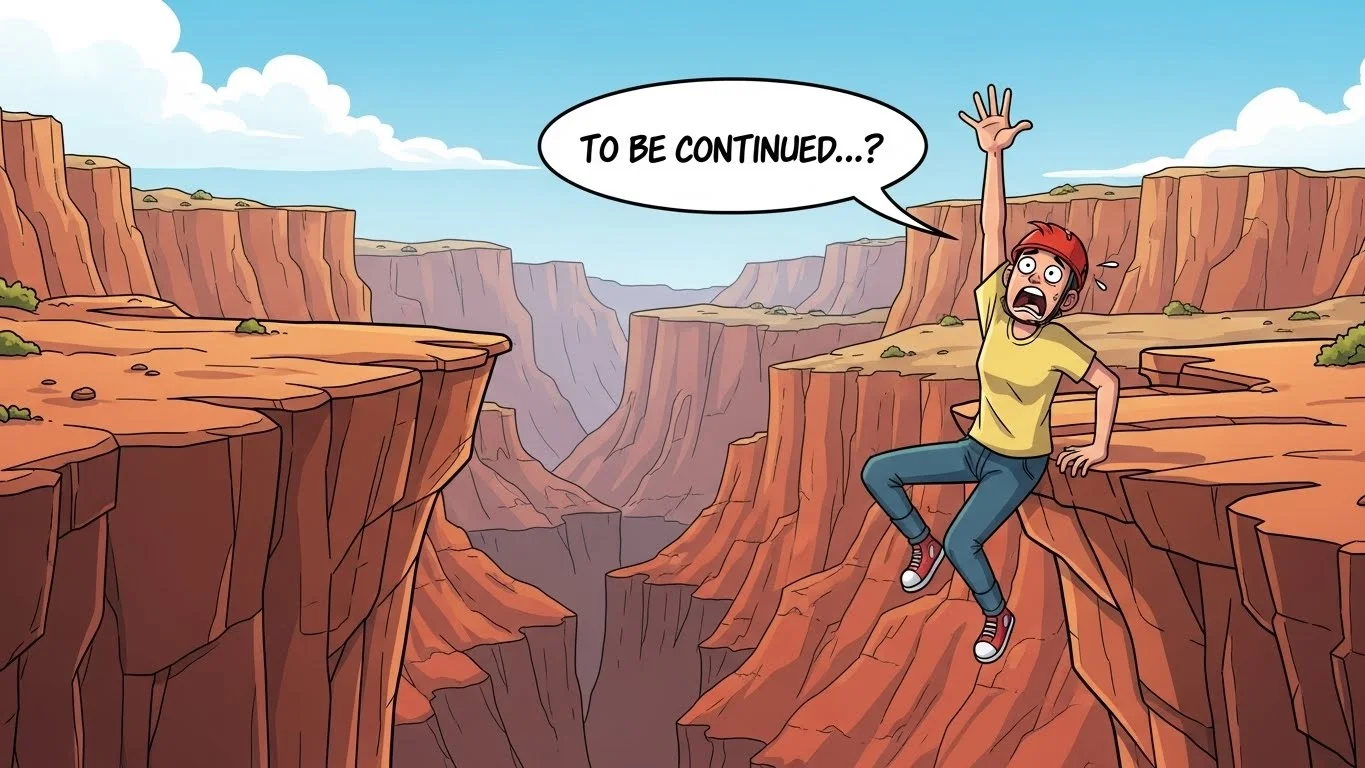
In literature, cliffhangers:
Increase tension and excitement
Encourage readers to predict outcomes
Often appear at the end of chapters or sections
Classic examples include adventure novels and mystery stories.
Cliffhanger Meaning in Movies and TV
In visual media, cliffhangers:
Keep audiences anticipating the next scene
Are often accompanied by dramatic music or camera angles
Can leave characters in physical or emotional peril
Cliffhanger in Series and Sequels
Cliffhangers are especially common in:
Multi-part movie franchises
TV miniseries
Book series
They help maintain continuity and viewer loyalty.
Cliffhanger Meaning in Games
In video games, cliffhangers appear when:
A level ends without resolution
A story mission leaves the character in danger
Developers hint at future content or expansions
Gamers often eagerly await the next update or sequel.
Why Cliffhangers Are Effective
Cliffhangers are effective because:
They trigger curiosity and anticipation
They create emotional investment in the story
They encourage continued engagement with the content
How to Recognize a Cliffhanger
Look for endings that:
Leave a key event unresolved
Introduce a sudden twist
Put characters in danger or uncertain situations
If the story keeps you wondering what happens next, it’s likely a cliffhanger.
Cliffhanger Meaning in Pop Culture
Cliffhangers are a staple in:
Reality TV eliminations
Streaming series endings
Comic book story arcs
They often become talking points and trends online.
Cliffhanger Meaning in Marketing
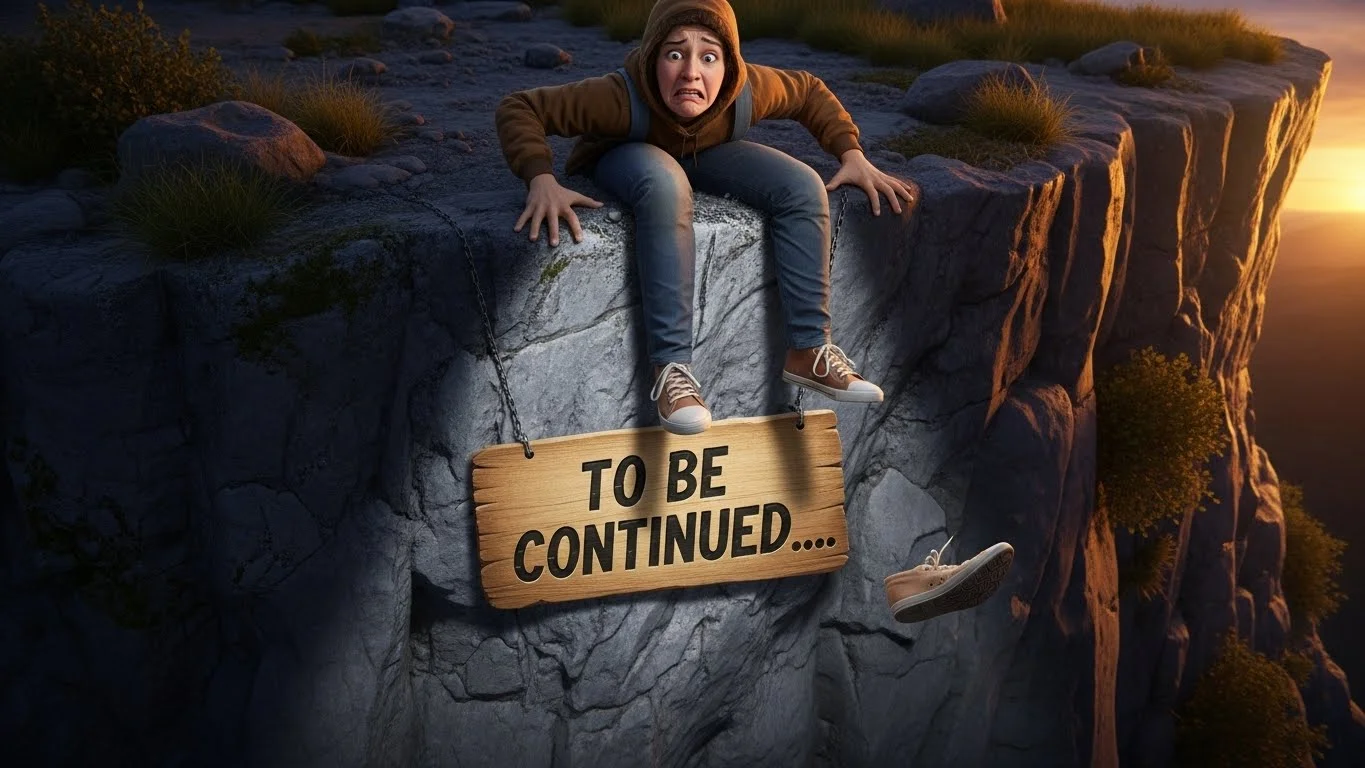
Marketers also use cliffhangers to:
Build anticipation for product launches
Tease upcoming campaigns
Keep audiences engaged across multiple releases.