
What Does YIMBY Meaning
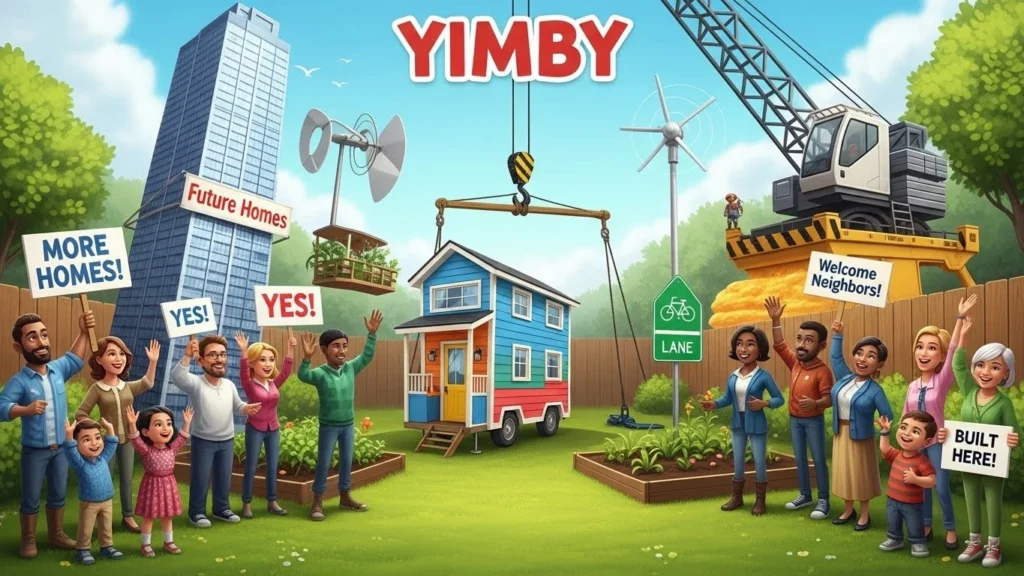
• Stands for “Yes In My Back Yard”
• Supports local housing development
• Advocates for urban growth and affordable housing
Origin of the Term YIMBY
• Emerged in the early 2000s
• Response to restrictive housing movements
• Popularized in housing and urban policy discussions
Origin of the Term YIMBY 2026
The term YIMBY emerged in the 2010s as housing costs rose in major cities.
It became popular through:
Housing advocacy groups
Urban planners
Political discussions
The word highlights a pro-development attitude.
YIMBY Meaning in Housing Policy 2026
In housing policy, YIMBYs support:
Building more homes
Increasing housing density
Changing zoning laws
Their goal is to reduce housing shortages and high rents.
YIMBY Meaning in Politics 2026
In politics, YIMBY refers to:
Movements advocating housing reform
Politicians supporting development
Voters favoring growth-friendly policies
It often appears in debates about affordability.
YIMBY in Simple Terms
• People who support new local development
• Encourages building homes or infrastructure
• Seeks solutions to housing shortages
YIMBY in Urban Planning
• Promotes higher-density housing
• Supports mixed-use development
• Aims to reduce urban sprawl
YIMBY in Politics
• Influences housing legislation
• Advocates for affordable housing policies
• Engages in local and national policy debates
YIMBY vs NIMBY
• YIMBY supports construction and growth
• NIMBY opposes change in neighborhoods
• Represents opposing community attitudes
Examples of YIMBY Support
• Approving apartment buildings in cities
• Supporting zoning changes for housing
• Backing affordable housing initiatives
Emotional Meaning of YIMBY
• Suggests openness and progressiveness
• Can reflect community-minded thinking
• Positive advocacy for development
YIMBY in Daily Life
• Used in community meetings and discussions
• Appears in news articles about housing
• Seen in social media debates on development
Common Misunderstandings About YIMBY
• Not everyone who supports building is YIMBY
• Does not mean unrestricted construction
• Focused on responsible urban planning
YIMBY in Modern Usage
• Increasingly popular in cities with housing shortages
• Used by activists, planners, and policymakers
• Often part of public discussions on affordable housing
Importance of YIMBY
• Helps solve housing crises
• Encourages sustainable urban growth
• Balances community needs with development
When to Use the Term YIMBY
• Discussing housing policies
• Writing about urban planning or real estate
• Referring to supportive community attitudes
Cultural Significance of YIMBY
• Reflects modern urban development trends
• Challenges traditional resistance to change
• Promotes inclusive housing strategies
Why Understanding YIMBY Matters
• Clarifies debates about housing
• Supports informed discussions in communities
• Helps distinguish between YIMBY and NIMBY perspectives