
What Does Limbs Meaning
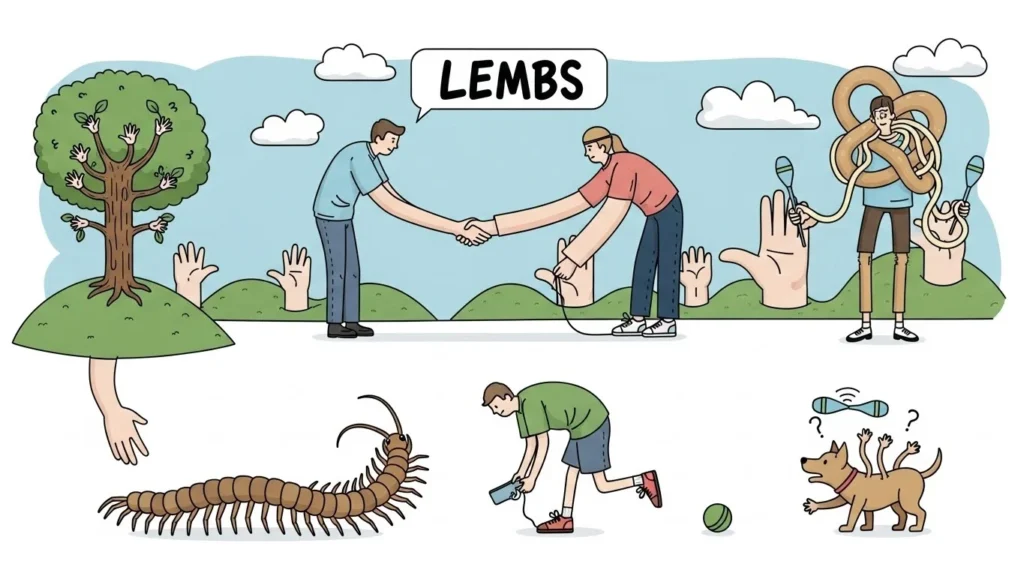
• Appendages used for movement and function
• Includes arms, legs, wings, or fins
• Essential for mobility and interaction with the environment
Origin of the Word Limbs Meaning
• Comes from Old English lim meaning “body part or member”
• Historically used in anatomy and literature
• Adopted in modern biological terminology
Limbs Meaning in Simple Terms
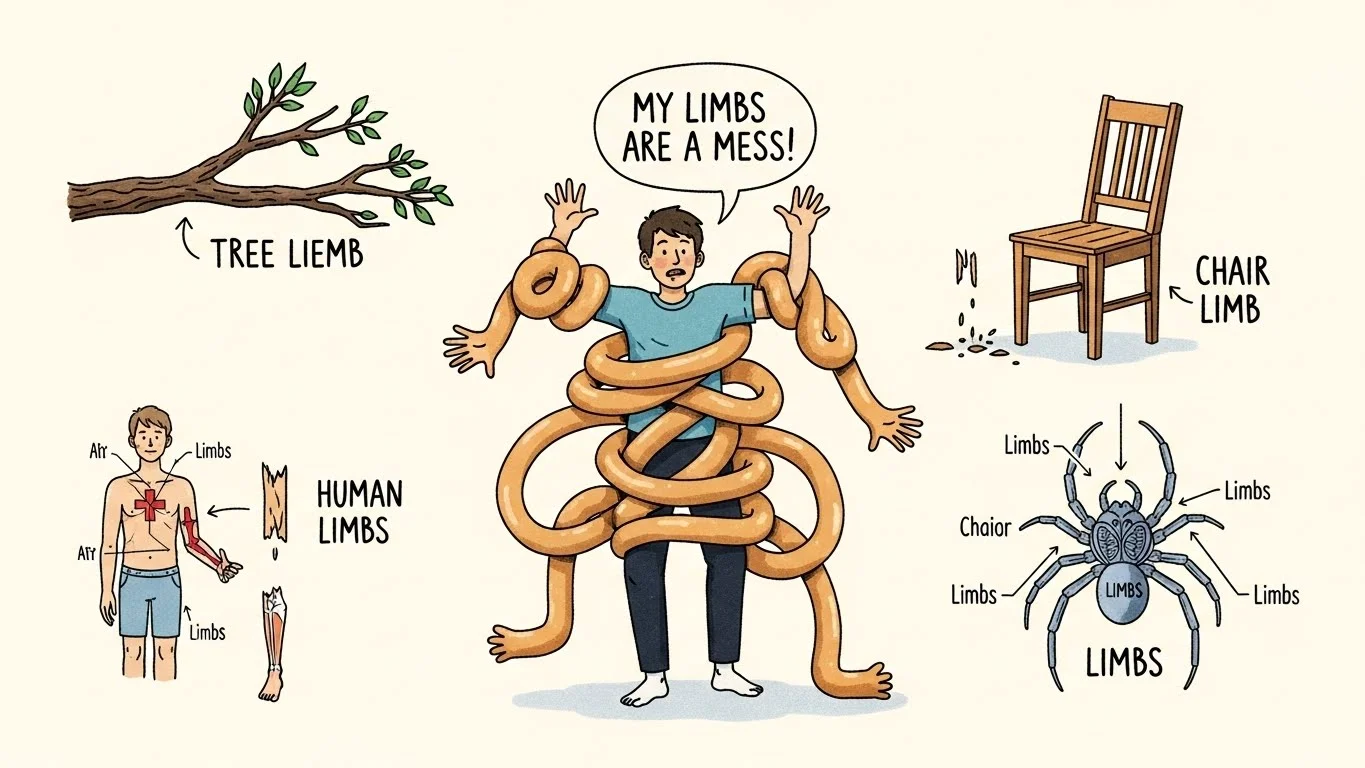
• Arms and legs in humans
• Wings or fins in animals
• Used for movement, grabbing, or balancing
Types of Limbs in Humans
• Upper limbs – arms and hands
• Lower limbs – legs and feet
• Include joints, muscles, and bones for movement
Limbs in Animals
• Wings in birds for flying
• Fins in fish for swimming
• Legs in mammals for walking or running
Functions of Limbs
• Mobility – walking, running, swimming
• Manipulation – grasping or holding objects
• Support – balancing and posture
Limbs in Daily Life
• Walking, lifting, or carrying items
• Performing work or household tasks
• Participating in sports and exercise
Limbs in Medicine
• Studied in anatomy and physiology
• Injuries or amputations affect mobility
• Rehabilitation and prosthetics restore function
Limbs in Evolution
• Adapted for specific functions in species
• Structural differences for walking, flying, or swimming
• Show evolution and environmental adaptation
Common Misunderstandings About Limbs
• Not all limbs are legs or arms
• Wings and fins are also considered limbs
• Function varies across species
Examples of Limbs Usage
• Raising your hand – upper limb
• Kicking a ball – lower limb
• Bird flying with wings – limb function
Emotional and Symbolic Meaning of Limbs
• Can symbolize strength or freedom
• Used in idioms like “lend a hand”
• Represents support and action
When to Use the Term Limbs
• Discussing anatomy or biology
• Explaining movement and function
• Writing educational or scientific content
Limbs in Modern Usage
• Appears in medicine, biology, and fitness
• Used metaphorically in literature and speech
• Common in daily conversation about body parts