
What Does Omnivert Meaning
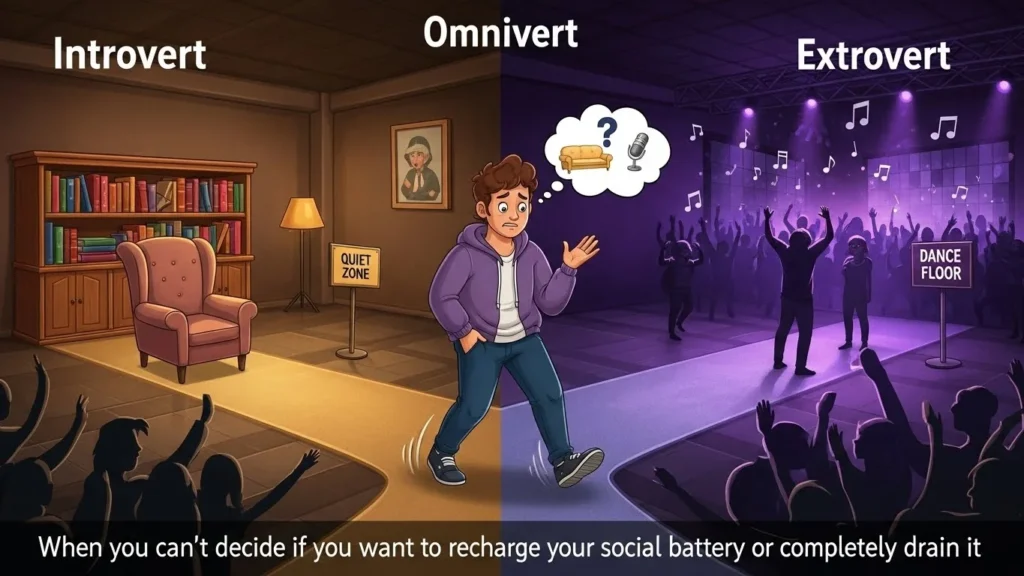
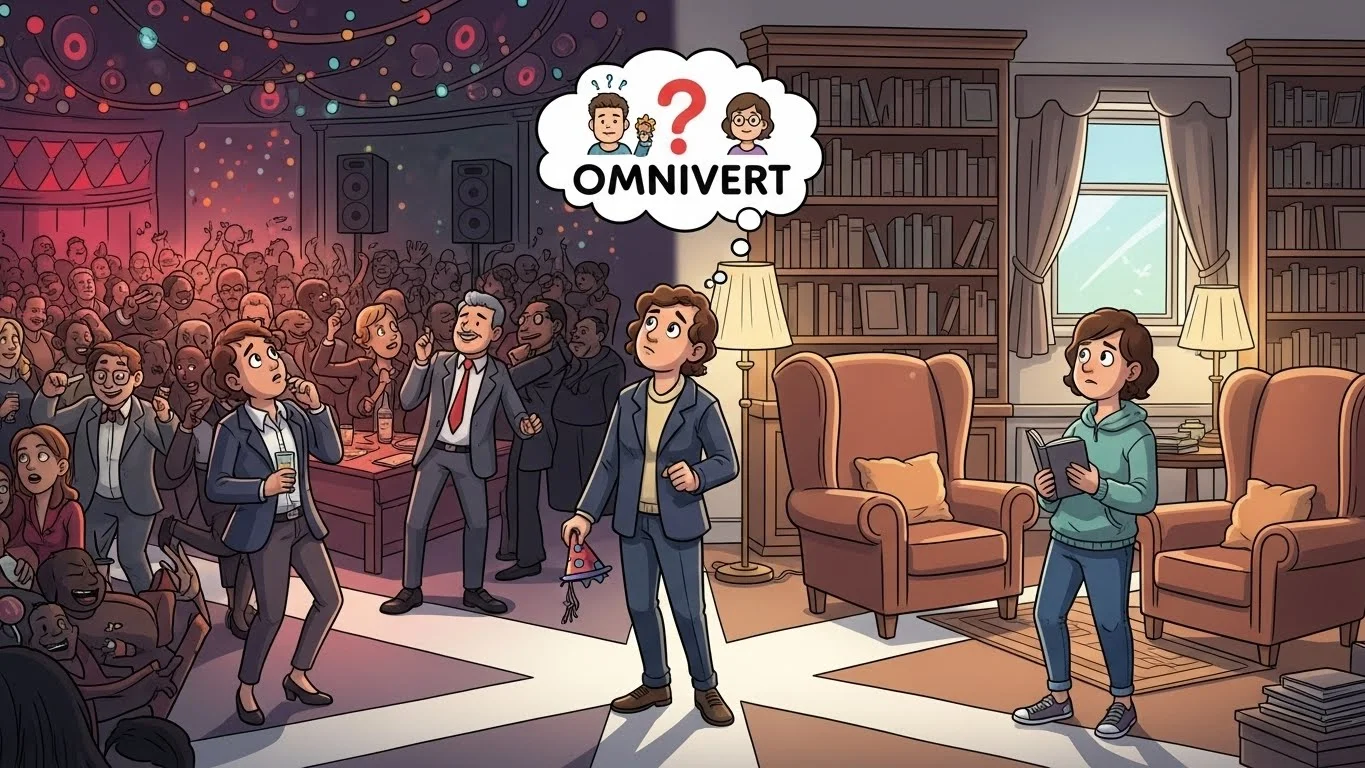
• Someone with both introvert and extrovert traits
• Can enjoy socializing and alone time
• Behavior shifts depending on situation
Origin of the Word Omnivert Meaning
• Combines “omni” (all) and “vert” (turn)
• Modern psychological term
• Describes flexible personality behavior
Omnivert Meaning in Simple Terms
• Acts outgoing sometimes
• Enjoys solitude at other times
• Adapts to social needs
Omnivert vs Extrovert
• Extroverts are mostly outgoing
• Omniverts can switch between states
• Social energy varies by context
Omnivert vs Introvert
• Introverts prefer alone time
• Omniverts balance social and private life
• Can engage fully in both environments
Omnivert in Daily Life
• Comfortable at parties and home
• Can lead groups and work independently
• Adjusts energy to circumstances
Emotional Traits of Omniverts
• Flexible and adaptable
• Sensitive to social cues
• Can handle varying emotional situations
Advantages of Being an Omnivert
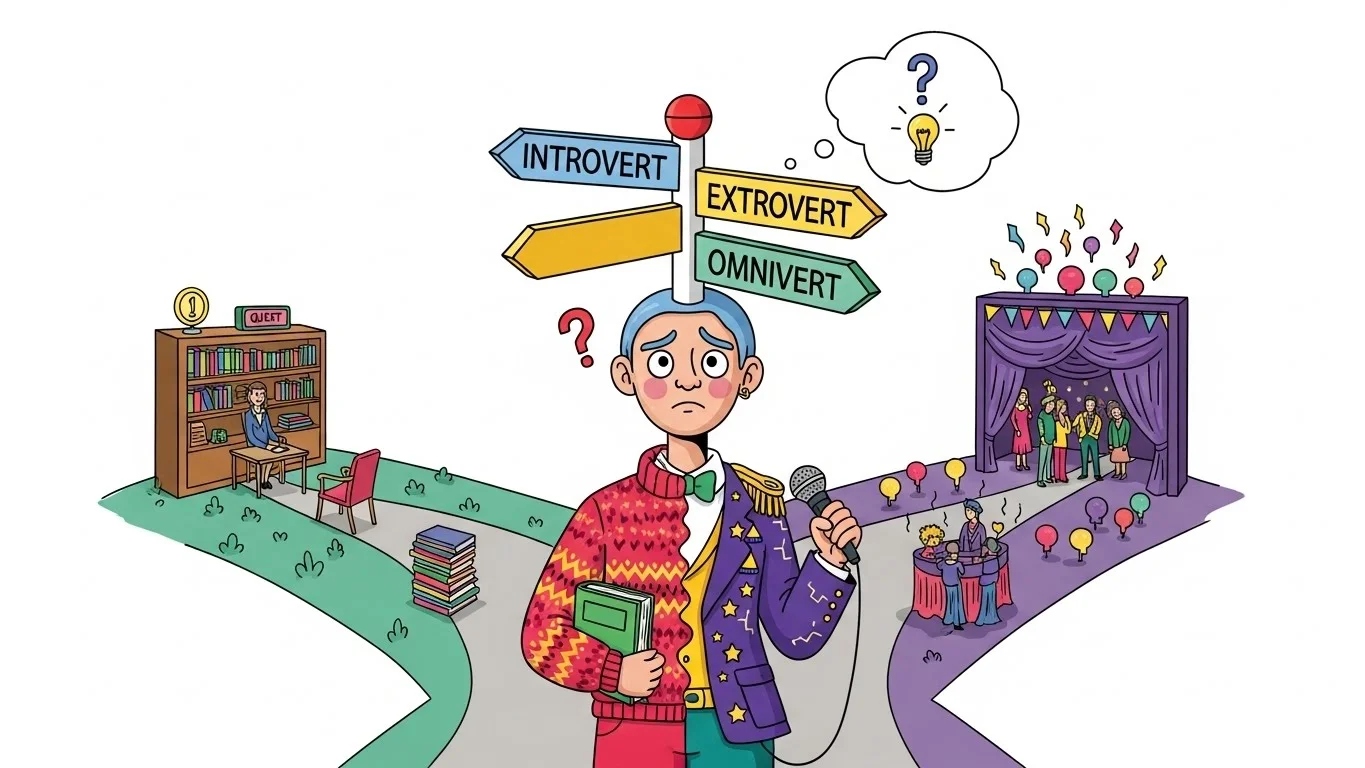
• Strong interpersonal skills
• Can work in diverse environments
• Understands both introvert and extrovert perspectives
Challenges Omniverts Face
• Sometimes feel misunderstood
• Energy levels fluctuate unpredictably
• Social expectations can be confusing
Omnivert in Relationships
• Can enjoy social and private moments with partners
• Adapts to friends’ personalities
• Maintains balance between closeness and space
Omnivert at Work
• Can lead teams or work independently
• Flexible in collaborative settings
• Can switch between quiet focus and active engagement
Common Misunderstandings About Omniverts
• Not “two-faced”
• Not indecisive
• Simply adaptable to social context
Omnivert in Modern Usage
• Used in personality discussions online
• Appears in social media and blogs
• Increasingly recognized in psychology
Examples of Omnivert Behavior
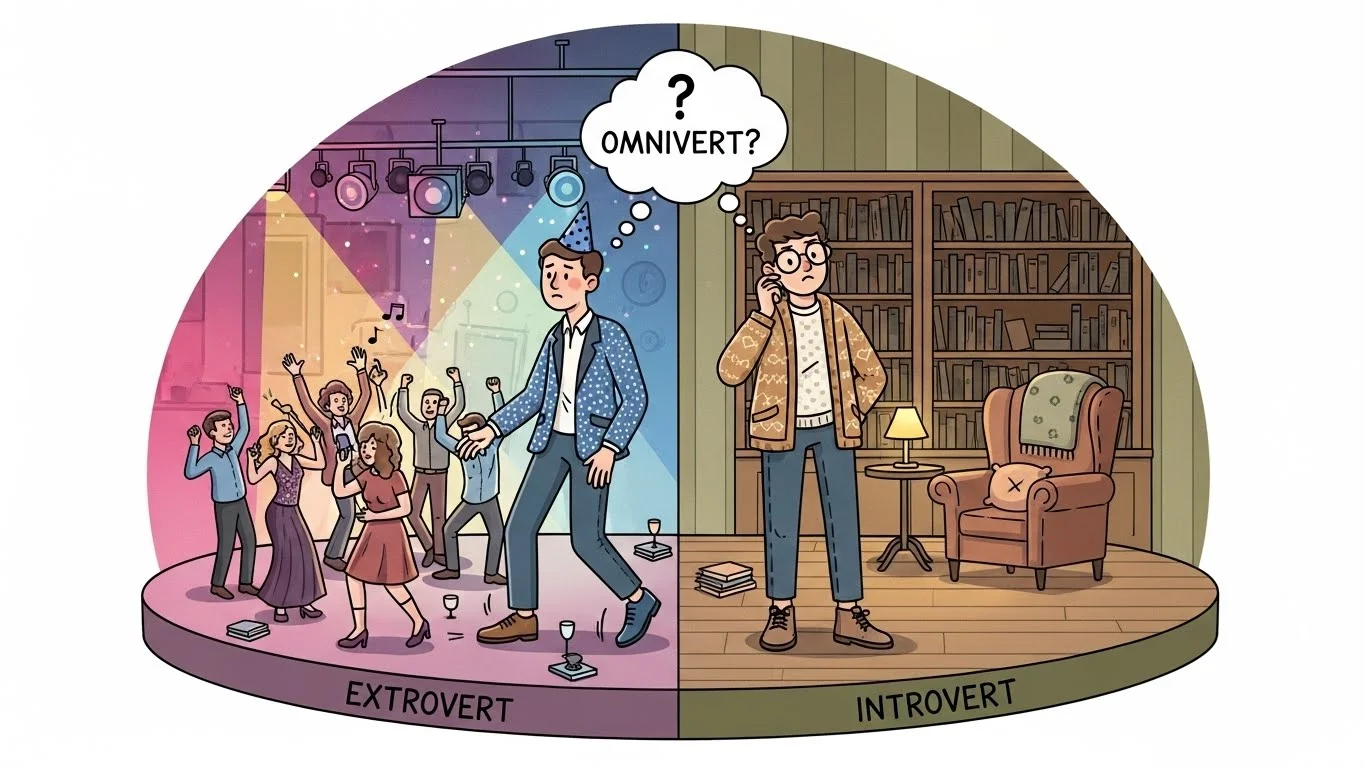
• Attending a party but enjoying alone breaks
• Leading a meeting and later reflecting quietly
• Social online but reserved offline
When to Use the Term Omnivert
• Discussing personality types
• Explaining social adaptability
• Talking about energy balance