
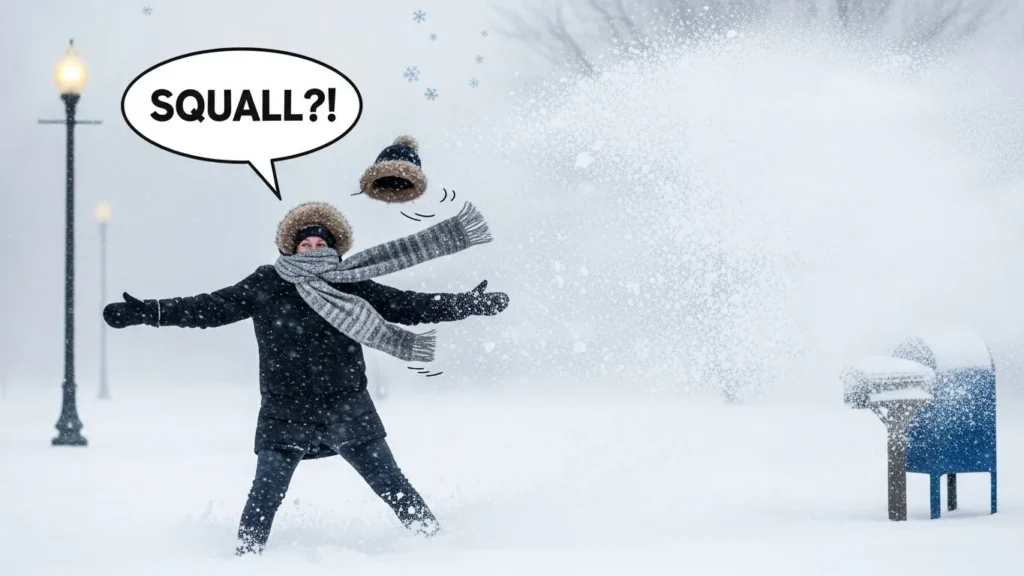
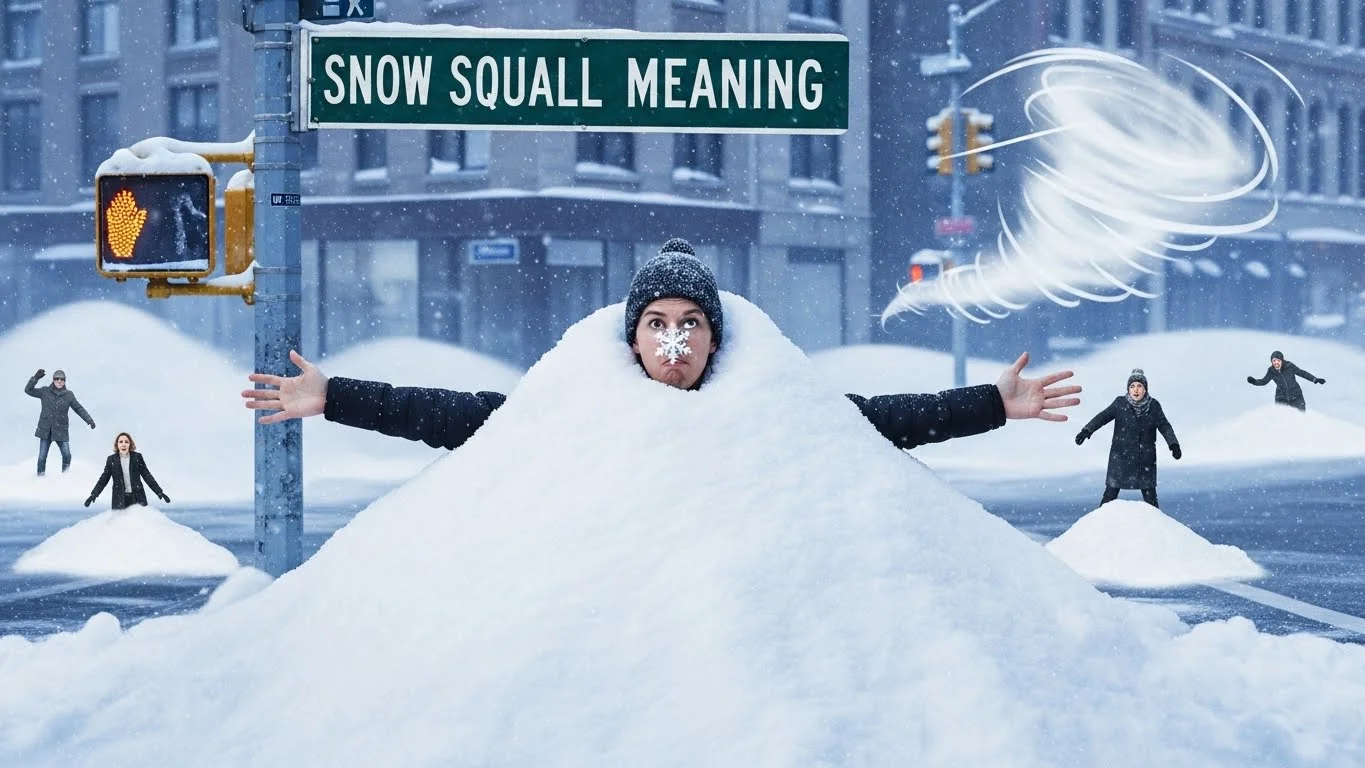
What Does Snow Squall Meaning
• A brief, intense snowfall
• Often accompanied by strong winds
• Causes rapid visibility reduction
Origin of the Term Snow Squall Meaning
• Comes from meteorology terminology
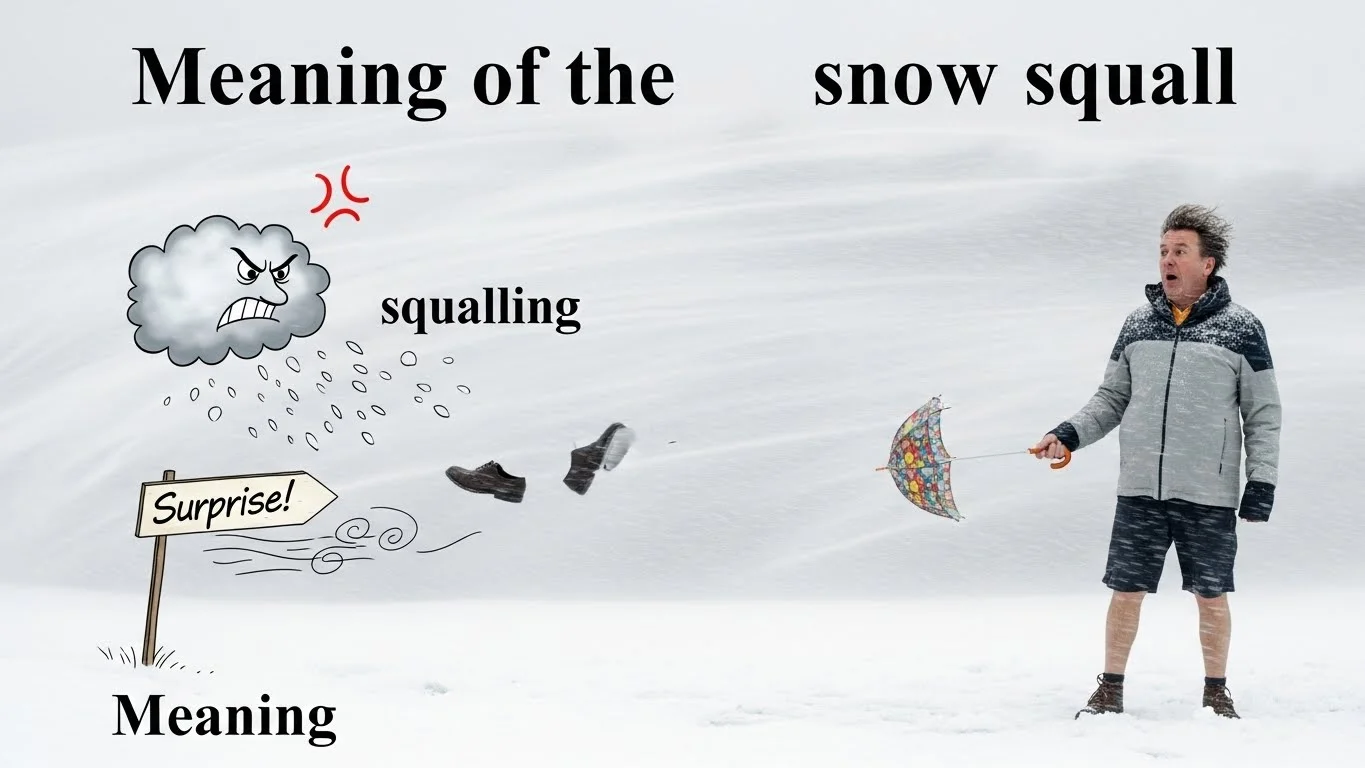
• “Squall” means sudden gust or storm
• Term adopted for winter weather warnings
Snow Squall in Simple Terms
• Quick but heavy snowstorm
• Sudden and unexpected weather change
• Can be hazardous for drivers
Snow Squall vs Blizzard
• Snow squall is brief and sudden
• Blizzard lasts longer with sustained wind
• Both reduce visibility, but duration differs
Effects of a Snow Squall
• Sudden icy roads
• Poor driving conditions
• Flight delays or disruptions
Safety During a Snow Squall
• Avoid travel if possible
• Slow down when driving
• Keep emergency supplies in your vehicle
Snow Squall in Weather Reports
• Often issued as an official warning
• Alerts drivers and communities
• Helps prevent accidents
Snow Squall in Daily Life
• Can disrupt commuting and travel plans
• May cause school or work delays
• Requires quick adaptation
Meteorological Causes of Snow Squalls
• Cold air moving over warmer ground
• Strong wind gusts pushing snow
• Localized weather phenomena
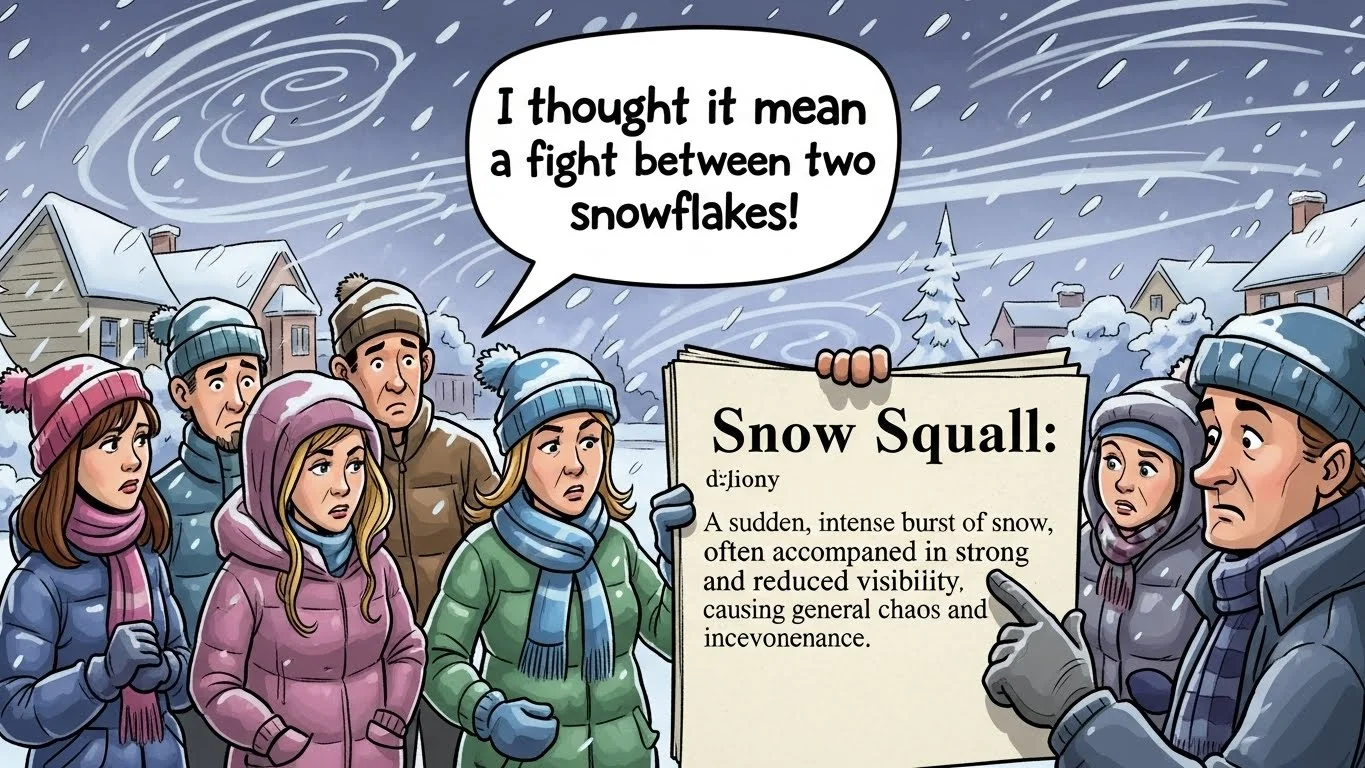
Common Misunderstandings
• Not every snowfall is a snow squall
• Usually shorter and more intense than normal snow
• Can be mistaken for blizzards or flurries
Snow Squall in Modern Usage
• Common in news and weather alerts
• Used in traffic reports and apps
• Increasingly discussed in social media warnings