


What Does Kun Meaning
• A Japanese honorific suffix
• Used to address males respectfully or casually
• Indicates familiarity or friendship
Origin of the Word Kun
• Comes from Japanese language and culture
• Often paired with male names
• Used in schools, workplaces, and anime
Kun in Simple Terms
• Means “boy” or “young man” informally
• Shows respect among friends or juniors
• Less formal than “san”
Kun in Names
• Added after a male’s name (e.g., Taro-kun)
• Common among peers and colleagues
• Reflects familiarity and social relationship
Kun in Anime And Media
• Frequently appears in Japanese animation
• Characters address each other with “kun”
• Indicates social hierarchy and closeness

Kun in Daily Conversation
• Used between teachers and students
• Common in workplaces for juniors
• Shows polite familiarity
Kun vs San
• San is formal and neutral
• Kun is casual or friendly
• Both are honorifics but differ in tone
Emotional Meaning Of Kun
• Shows respect without strict formality
• Encourages closeness and familiarity
• Reflects cultural etiquette
Common Misunderstandings
• Not a first name or nickname
• Not always used for males only
• Usage depends on age, relationship, and context
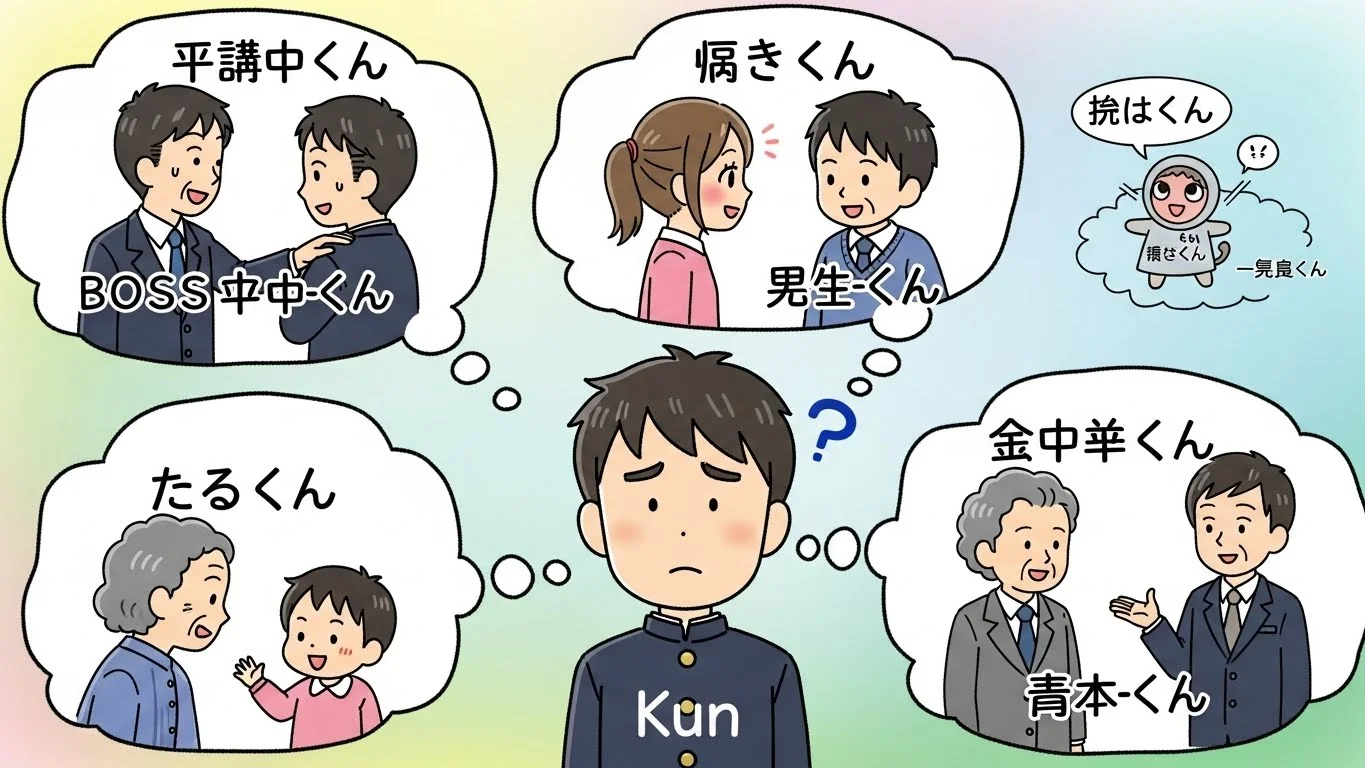
Kun In Modern Online Usage
• Used in social media and forums
• Appears in fan culture and anime communities
• Increasingly recognized internationally