
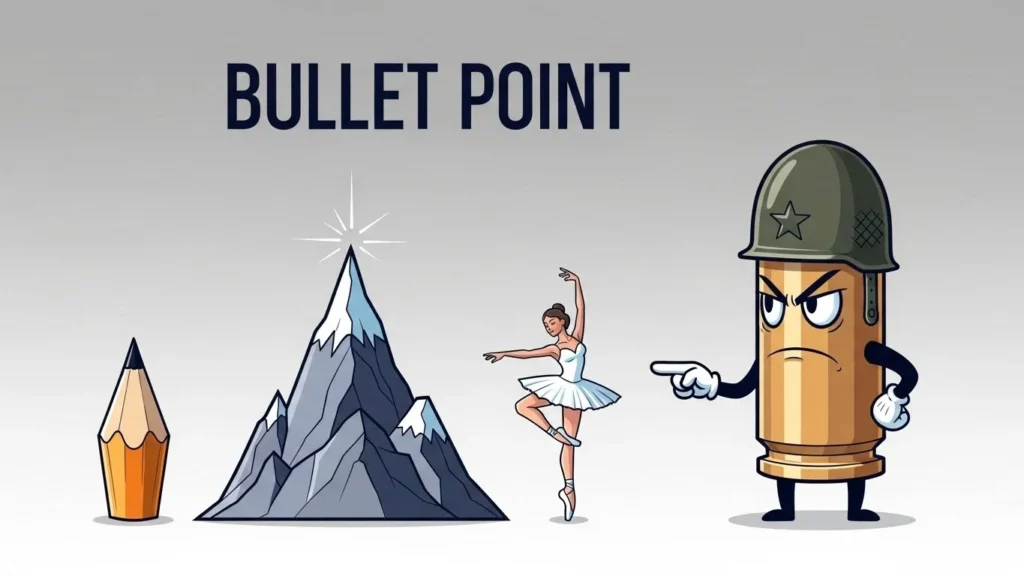

What is a Bullet Point Meaning
A symbol like •, –, or ◦ used to mark items in a list
Separates ideas for better clarity
Makes content easier to read and scan
Purpose of Bullet Point Meaning
Highlight key information without long paragraphs
Organize ideas logically and visually
Help readers focus on important points
Common Bullet Point Symbols
• (solid dot) – most commonly used in writing
– (dash) – often for simple or casual lists
◦ (hollow circle) – for sub-points or secondary ideas
★ (star) – emphasizes special items
Benefits of Using Bullet Points
Improves readability and visual appeal
Allows readers to quickly scan content
Conveys key points efficiently without clutter
Bullet Points in Writing
Organize articles, reports, and essays
Break long paragraphs into digestible pieces
Highlight important concepts clearly
Bullet Points in Presentations
Highlight key points on slides
Keep presentations concise and readable
Improve audience understanding and retention
Bullet Points in Emails
Make instructions and information easy to follow
Help recipients focus on key tasks or priorities
Improve clarity and professionalism

Bullet Points in Web Content
Make online articles more scannable
Enhance user experience and engagement
Improve readability for mobile and desktop users
Best Practices
Keep bullet points concise and consistent
Use parallel structure for clarity
Limit number of bullets to maintain focus
Bullet Points vs Numbered Lists
Bullet points for unordered lists
Numbered lists for steps, sequences, or rankings
Both improve clarity but serve different purposes
Sub-Bullets and Nested Lists
Indent secondary points for hierarchy
Show relationships between main ideas and sub-ideas
Make complex content more organized
Misunderstandings About Bullet Points
Not just decorative – they organize and emphasize content
Overusing can reduce effectiveness
Each bullet should be meaningful and clear
Accessibility Considerations
Use standard symbols like • for screen readers
Ensure readability on mobile and desktop
Avoid overly complex formatting
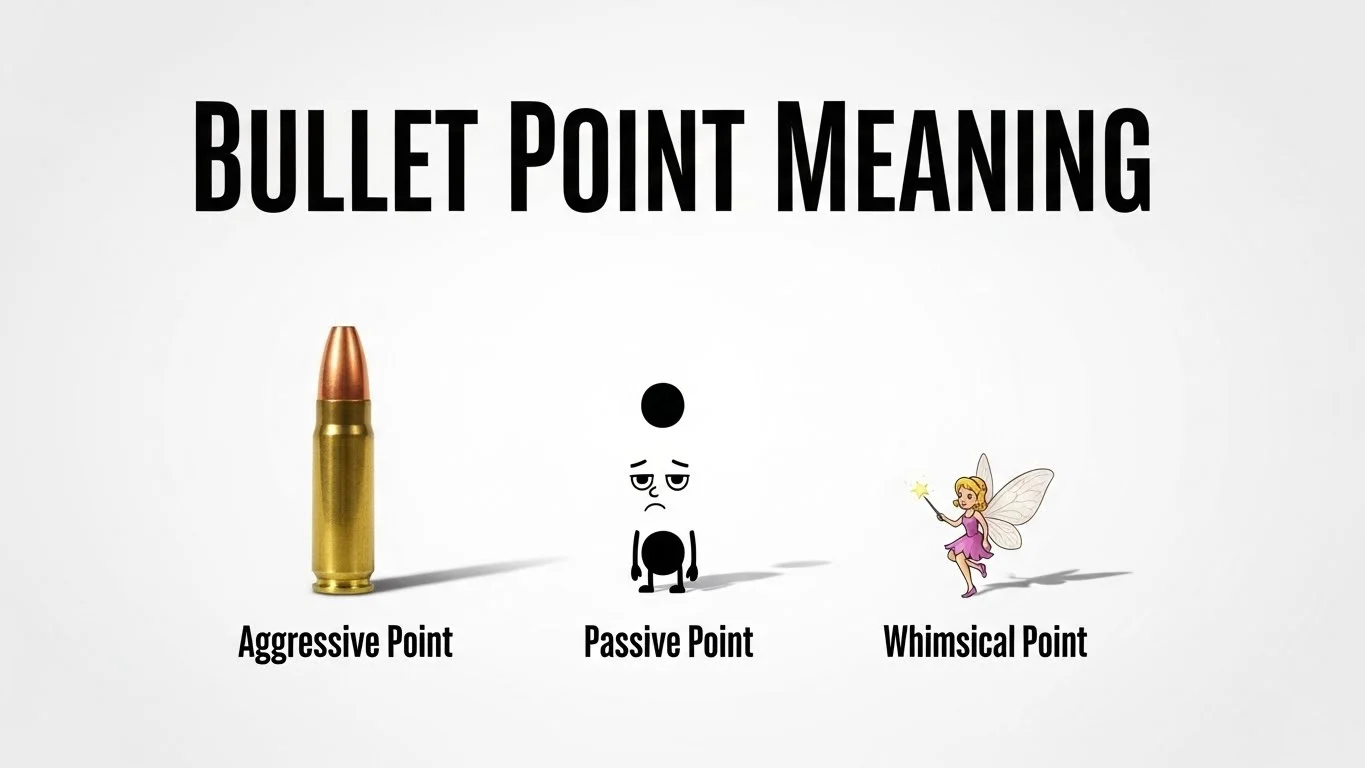
Creative Uses of Bullet Points
Brainstorming ideas in writing or projects
Highlight plot points or key traits in creative content
Organize thoughts visually for easier understanding