

Port Meaning in Computer
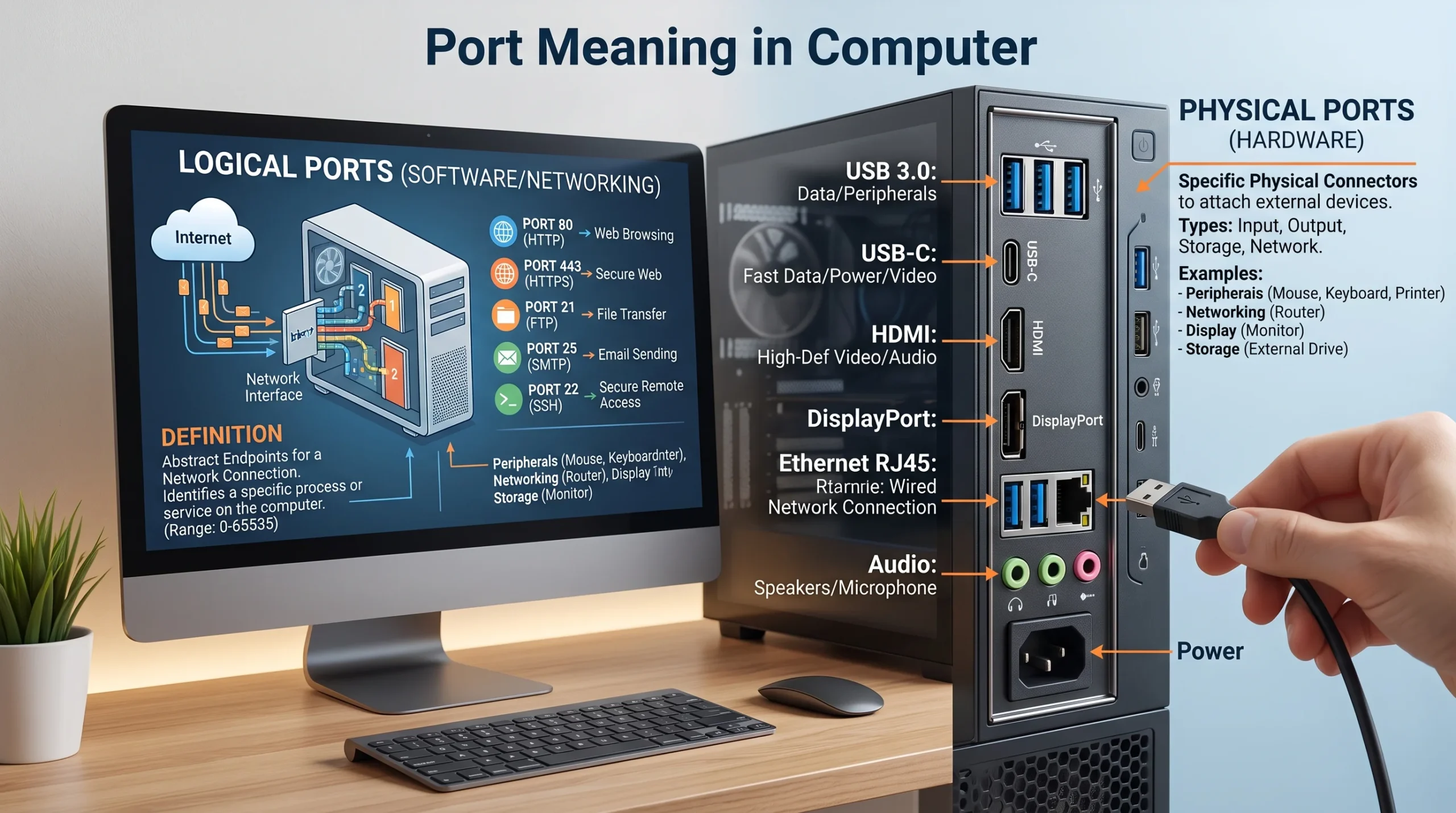
In computing, a port is a communication endpoint that allows software applications and devices to exchange data. Ports help computers identify which program should receive incoming or outgoing information over a network. They are identified by port numbers, such as Port 80 for HTTP web traffic and Port 443 for secure HTTPS connections.
Examples:
- A web browser connects to a website using Port 443 for secure browsing.
- An email application may use Port 587 to send emails through an SMTP server.
- A network administrator opens specific ports in a firewall to allow certain services.
Port Meaning in Computer Networks
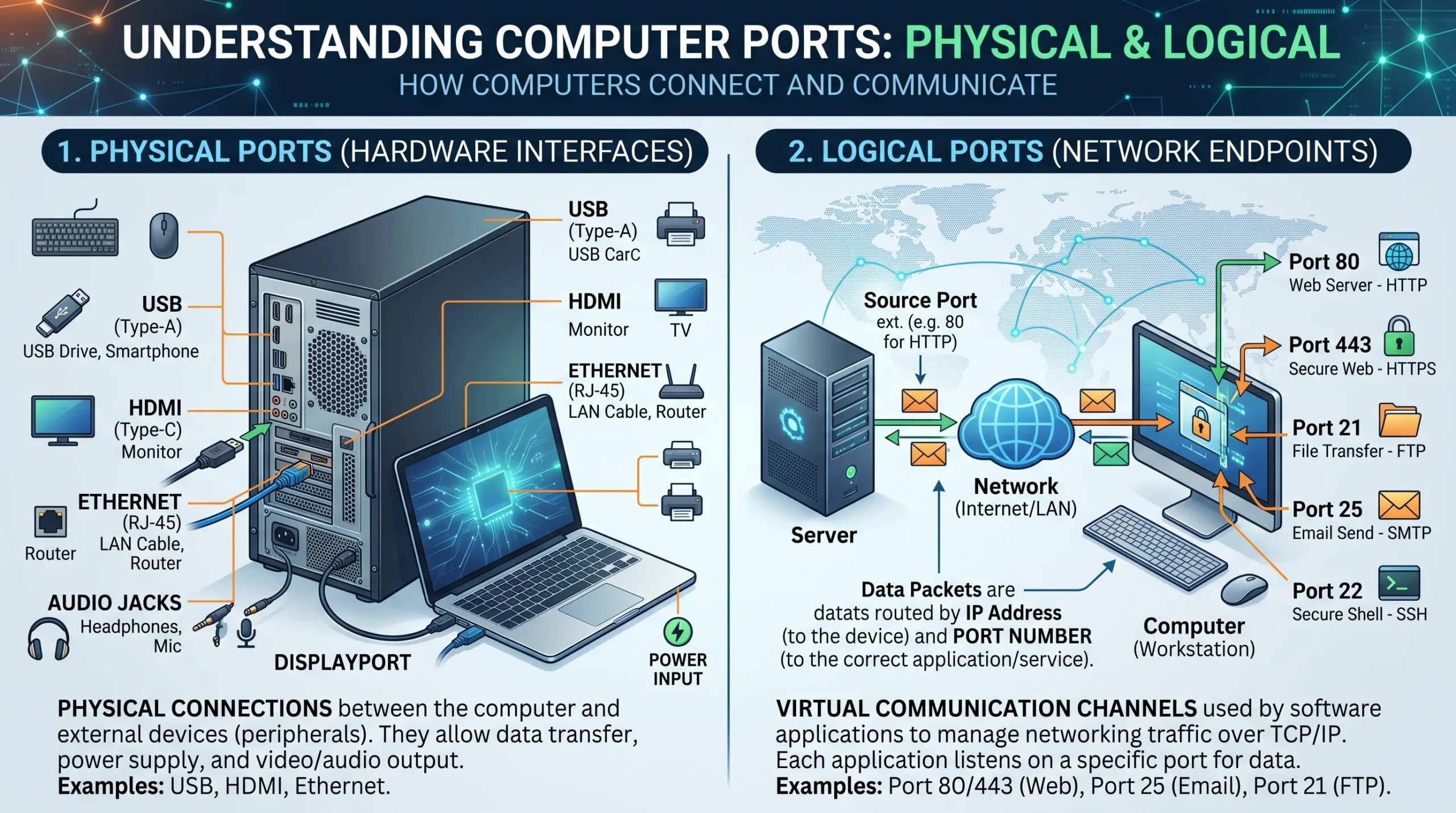
In computer networks, a port is a logical communication channel used by network protocols to direct internet traffic to the correct application or service on a device. Every network service is associated with a unique port number, making data transmission organized and efficient.
Examples:
- DNS services commonly use Port 53.
- Remote desktop connections often use Port 3389.
- FTP servers use Port 21 for file transfers.
Port Meaning in Transport
In transportation, a port is a place where ships, boats, or other watercraft dock to load and unload passengers or cargo. Ports play a vital role in international trade, shipping, and logistics by connecting countries through sea routes.
Examples:
- Thousands of shipping containers arrive at the port every day.
- Cruise ships depart from the port during the tourist season.
- The company exports goods through a nearby seaport.
Port Meaning in English
In English, the word port has several meanings depending on the context. It can refer to a harbor for ships, a connection point in technology, a type of wine, or even the left side of a ship or aircraft. Understanding the surrounding context helps determine its intended meaning.
Examples:
- The fishermen returned safely to the port.
- Plug the cable into the USB port.
- They celebrated with a glass of port wine.
- Turn the aircraft slightly to port.
Port Meaning in Medical
In medicine, a port (also called an implantable port or port-a-cath) is a small medical device placed beneath the skin to provide easy access to a patient’s bloodstream. It is commonly used for chemotherapy, long-term medications, blood transfusions, and frequent blood tests.
Examples:
- The patient received chemotherapy through a chest port.
- Doctors implanted a port to reduce repeated needle sticks.
- Nurses used the port to administer medication safely.
Port Meaning in Food
In food and beverage contexts, port usually refers to port wine, a sweet, fortified wine traditionally produced in Portugal. It is often served as a dessert wine and pairs well with cheese, chocolate, and rich desserts. In cooking, port wine is also used to make flavorful sauces and marinades.
Examples:
- The chef prepared a steak with a port wine sauce.
- They enjoyed a glass of port after dinner.
- Port pairs well with blue cheese and dark chocolate.
Port Meaning in Chat
In online chats and social media, port is not a common slang term. Instead, it usually refers to porting, which means transferring data, software, games, or content from one platform or device to another. In gaming and tech communities, users often discuss whether an app or game has been “ported” to a different operating system.
Examples:
- The developer will port the game to PC next year.
- Can you port your contacts to the new phone?
- This application was successfully ported from Android to iOS.
Port Meaning in Business
In business, port most commonly refers to a shipping port, where goods are imported and exported. It may also describe a connection point in logistics, international trade, and supply chain management. Businesses rely on ports to move products efficiently across countries and continents.
Examples:
- The shipment was delayed due to congestion at the port.
- The company imports raw materials through the nearest seaport.
- Efficient port operations help reduce transportation costs and improve global trade.

Port Meaning in Simple Terms
At its core, port can mean:
A harbor or dock for ships
A connection point in technology
A transfer or adaptation from one form to another
Its meaning changes depending on the field or context.
Port Meaning in Geography
In geography, a port is a location on a coast where ships can dock safely to load or unload cargo or passengers.
Examples include:
Port of Los Angeles
Port of Rotterdam
Ports are essential for trade, travel, and transportation.
Port vs Harbor
Port: A facility where ships load and unload cargo or passengers; may include docks, warehouses, and terminals.
Harbor: A natural or man-made sheltered body of water where ships can anchor safely.
All ports are harbors, but not all harbors are ports.
Port Meaning in Technology
In computing, a port is a connection point used for communication between devices, software, or networks.
Examples:
USB port: connects peripherals like keyboards or mice
Network port: allows software to send/receive data
Ports in tech are gateways that enable interaction between hardware or software.
Port Meaning in Software
In software development, porting means adapting a program to run on a different system or platform.
Example:
Porting a video game from console to PC
Porting an app from Android to iOS
This allows software to reach more users across different devices.
Port Meaning in Wine
In beverages, port is a type of fortified wine, usually sweet and served as a dessert wine.
Example:
Ruby port
Tawny port
This usage is unrelated to technology or geography but is widely recognized in culinary contexts.
Port Meaning in Daily Life
In daily life, port may appear in phrases like:
“Airport” – a place where planes arrive and depart
“Seaport” – a city or facility for ships
These phrases use port to signify a point of entry or exit.
Port Meaning in Transport
In transport, a port often refers to:
Shipping docks for cargo
Passenger terminals for ferries or cruise ships
It plays a crucial role in global trade and travel infrastructure.
Port Meaning in Expressions
The term port is often used metaphorically:
“Safe port” – a safe place or refuge
“Port of call” – a stop during a journey
These expressions carry the idea of arrival, safety, or transit.
Port Meaning in Networking
Network ports allow computers and devices to communicate via specific channels.
Example:
Port 80 is commonly used for HTTP traffic
Port 443 is used for secure HTTPS connections
Understanding ports is key for IT, cybersecurity, and networking.
Common Misunderstandings About Port
Not every dock or harbor is a “port” in technical or geographic terms.
In computing, a port does not refer to a physical harbor—it’s a logical connection.
Porting software does not mean physically moving it.
Context determines the correct interpretation.
Why Port Is a Multi-Meaning Word
English has many versatile words. Port is flexible because:
It has historical roots in shipping
It has been adapted to technology
It has metaphorical uses in everyday speech
How to Identify the Correct Port Meaning
Ask yourself:
Is it about travel, shipping, or location?
Is it about computers or software?
Is it a reference to wine or a metaphor?
The surrounding words usually clarify the intended meaning.
Port Meaning Across Cultures
The word port is used internationally in English, though specific terms may vary in other languages. Its core meanings remain the same:
Harbor or docking point
Connection or entry point
Adaptation or transfer
Summary of Port Meaning
Depending on context, port can refer to:
A coastal docking place for ships
A physical or logical connection in technology
A type of wine
The act of transferring software to a new platform
A metaphorical safe place or stop